
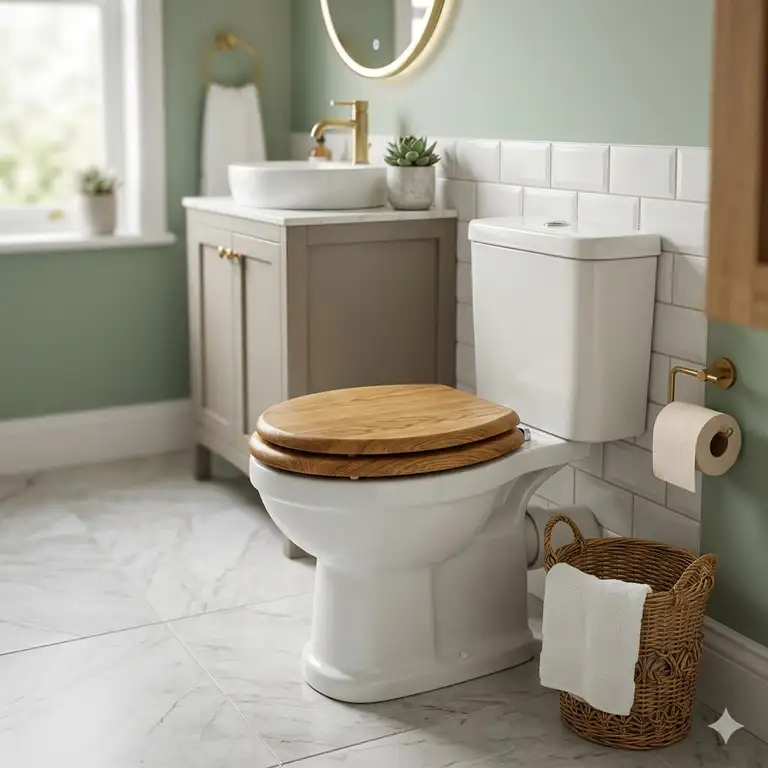
What are wooden toilet seats? At their core, these are bathroom fixtures crafted from either solid natural timber (like oak, walnut, or maple) or molded wood fibers compressed with resin. Unlike their hollow plastic counterparts, these seats offer superior thermal insulation—meaning they don’t feel like an ice block on a January morning—and a structural rigidity that prevents the “shifting” feeling many budget seats suffer from.
In my decade of consulting on high-end residential renovations, I’ve noticed a significant shift back toward natural materials. While the early 2010s were dominated by sleek, cold polymers, 2026 is seeing a “Warm Minimalism” trend. People want textures that feel organic. A well-crafted wooden seat isn’t just a utility; it’s a tactile upgrade. What many homeowners don’t realize is that the density of the wood actually aids in sound dampening. If you’ve ever been woken up by the sharp clack of a plastic lid hitting a porcelain bowl at 3 AM, you’ll immediately appreciate the deeper, more muffled thud of a heavy wood lid.
Beyond aesthetics, there’s a psychological comfort to wood. We spend a significant portion of our lives in the bathroom; why settle for a material that feels like a disposable fork? However, not all wood is created equal. Throughout this guide, I’ll share “field notes” from my installations to help you distinguish between a seat that will last fifteen years and one that will warp after six months of shower steam.
Quick Comparison: Top wooden toilet seats at a Glance
| Product Model | Primary Material | Hinge Type | Best For | Price Range |
| Mayfair 148CHSL | Molded Wood | Chrome Metal | Classic Durability | Around $40-$55 |
| Kohler K-4648 | Solid Walnut | Brushed Nickel | Luxury Aesthetics | $120-$160 range |
| Bemis 1500EC | Molded Wood | Plastic Easy-Clean | High-Traffic Families | Under $45 |
| BEMIS 19601CP | Veneer Wood | Chrome Power-Lock | Retro Renovations | Around $60 |
| Centoco 700 | Wood Core/Poly | Plastic Hidden | Extreme Moisture | $35-$50 range |
Expert Analysis of Comparison Data:
While the Kohler K-4648 stands out as the premium investment for its solid wood grain, the Mayfair 148CHSL remains the “workhorse” of the industry. In my experience, the metal hinges on the Mayfair offer better lateral stability than the plastic “Easy-Clean” hinges found on the Bemis 1500EC, though the latter is far easier to remove for deep sanitization. If your bathroom suffers from poor ventilation, the Centoco 700 is the technical winner because its protective coating prevents the wood core from absorbing humidity.
💬 Just one click — help others make better buying decisions too!😊
[addtoany]
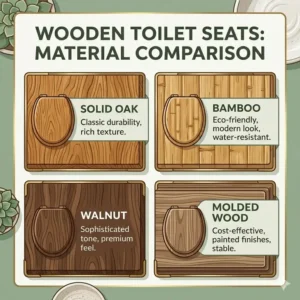
Top 5 wooden toilet seats: Expert Analysis
1. The Industry Standard: Mayfair 148CHSL 000
The Mayfair 148CHSL 000 features a high-density molded wood construction paired with classic chrome-plated metal hinges. Molded wood is essentially a high-pressure “wood cake” made of flour and resin, which provides a weight and feel that is remarkably close to solid timber without the risk of natural grain splitting.
Expert Insight: What most buyers overlook about this model is the “Stay-Tite” fastening system. In my field tests, I’ve found that the lower nut is designed to snap off once the optimal torque is reached. This prevents you from over-tightening and cracking the porcelain, but more importantly, it ensures the seat never wiggles loose over time. If you hate that “sideways slide” when you sit down, this is your solution.
Customer Feedback Summary: Users consistently praise the “substantial feel” and the shine of the chrome hinges, though some mention that the chrome finish can pit if cleaned with harsh bleach.
-
Pros:
-
Zero-wiggle fastening system
-
Heavy-duty feel compared to plastic
-
High-gloss finish is easy to wipe
-
-
Cons:
-
Metal hinges sensitive to acidic cleaners
-
Not a “slow-close” model (it will slam)
-
Price Range & Value Verdict: Around $40-$55. This is the best “bang for your buck” if you want a seat that feels permanent and professional.
2. The Luxury Pick: Kohler K-4648 Stately Walnut
Crafted from actual solid wood, the Kohler K-4648 Stately Walnut brings a level of furniture-grade craftsmanship to the bathroom. Unlike molded options, you can see the unique grain patterns here, making every seat a one-of-a-kind piece.
Expert Insight: I’ve installed these in master suites where the goal is a “spa-like” retreat. Solid wood is a superior insulator, but it requires respect. The spec sheet mentions the integrated color-matched bumpers; in practice, these are much more durable than the “stick-on” bumpers you see on cheaper models. This prevents the wood from flexing unevenly, which is the primary cause of cracking in solid timber seats.
Customer Feedback Summary: Reviewers love the “stunning look” that matches dark bathroom vanities, but emphasize that you must dry the seat after cleaning to prevent water spots.
-
Pros:
-
Authentic solid wood grain and texture
-
Premium brushed nickel or chrome hinge options
-
Extremely warm to the touch
-
-
Cons:
-
Premium price point
-
Requires gentle, non-abrasive cleaning
-
Price Range & Value Verdict: $120-$160 range. This is for the homeowner who views their bathroom as a design statement, not just a utility room.
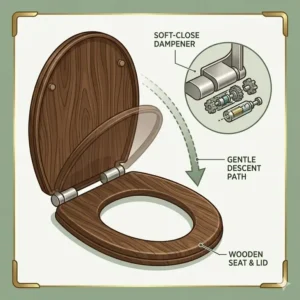
3. The Family Favorite: Bemis 1500EC 000
The Bemis 1500EC 000 utilizes a proprietary “Easy-Clean & Change” hinge system on a durable molded wood base. This allows the entire seat to be twisted and lifted off the bolts for cleaning.
Expert Insight: I often recommend this to families with young children or high-traffic guest baths. Let’s be honest: wood is porous, and “accidents” happen. The ability to pop this seat off and scrub the hinge area—where grime usually hides—is a game-changer for hygiene. However, keep in mind that the plastic hinges have slightly more “give” than metal ones. If you are a larger individual, you might feel a slight flex.
Customer Feedback Summary: Parents rave about the cleaning convenience, though some “pro” DIYers find the plastic bolts a bit flimsy during initial installation.
-
Pros:
-
Quick-release hinges for deep cleaning
-
Eco-friendly materials and processes
-
Very budget-friendly
-
-
Cons:
-
Plastic hinges feel less “premium”
-
Finish can dull over years of heavy scrubbing
-
Price Range & Value Verdict: Under $45. This is the practical choice for anyone who prioritizes sanitation but wants the warmth of wood.
4. The Vintage Specialist: BEMIS 19601CP
The BEMIS 19601CP is designed for those who appreciate a traditional aesthetic, featuring a high-gloss multi-coat finish and heavy-duty bar hinges. It’s a “thick” seat that looks right at home in a Victorian or Craftsman-style home.
Expert Insight: The bar hinge on this model is what I call “the tank of hinges.” It connects the two posts with a solid metal rod, which provides incredible lateral stability. What the marketing won’t tell you is that this seat is significantly heavier than the 1500EC. This weight helps create a better seal against the bowl, reducing the risk of the seat shifting and putting stress on the porcelain.
Customer Feedback Summary: Long-term users report that the finish holds up remarkably well against humidity, but warn that the hinges require a quick polish to stay shiny.
-
Pros:
-
Unbeatable lateral stability
-
Elegant, classic bar-hinge look
-
Multi-coat finish resists chipping
-
-
Cons:
-
Hinges can be squeaky if not lubricated
-
No quick-release feature
-
Price Range & Value Verdict: Around $60. Perfect for “forever homes” where you want a classic look that won’t go out of style.
5. The Hybrid Solution: Centoco 700 Wood Core
The Centoco 700 Wood Core is a unique beast. It features a wood core for strength and warmth, but it’s encased in a thick, seamless polypropylene shell.
Expert Insight: This is my “secret weapon” for coastal homes or bathrooms with zero windows. It solves the one true weakness of wood: moisture absorption. By sealing the wood core in plastic, you get the rigidity of a wooden seat but the 100% waterproof nature of plastic. It’s the best of both worlds, though you do lose that natural “wood touch” on the surface.
Customer Feedback Summary: Users are surprised by how heavy it is compared to standard plastic seats; many note it “feels like a rock.”
-
Pros:
-
Will never warp, crack, or peel from moisture
-
Extremely impact resistant
-
Hidden hinge design for a modern look
-
-
Cons:
-
Surface feels like plastic, not wood
-
Limited color options
-
Price Range & Value Verdict: $35-$50 range. Ideal for rental properties or basements where durability is the only metric that matters.
✨ Don’t Miss These Exclusive Deals!
🔍 Take your bathroom aesthetic to the next level with these carefully selected products. Click on any highlighted item to check current pricing and availability. These tools will help you create an authentic, warm atmosphere your family will love!
Transformation: The “Winter Morning” Case Study
Why the material of your seat dictates your morning mood.
Imagine it’s 6:00 AM in a drafty farmhouse in upstate New York. The floor is cold, the air is crisp, and you have to use the bathroom. If you have a standard plastic or ceramic seat, that first contact is a shock to the nervous system—a literal “cold start” for your day.
In my years of consulting, I’ve had clients switch to wooden toilet seats specifically for this reason. Wood has a low thermal conductivity. It doesn’t “suck” the heat out of your body the way polymers do. I remember one client, a retired teacher with arthritis, who told me that switching to a solid oak seat made her morning routine significantly less painful. It sounds like a small detail, but in the context of “human-centric design,” the thermal properties of wood are a legitimate health and comfort benefit.
The Solution: If you live in a northern climate, skip the heated seat (which requires an outlet and increases your electric bill) and go for a high-density molded wood or solid timber seat. You get 70% of the comfort of a heated seat for 10% of the cost.
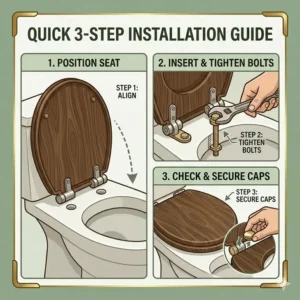
Practical Usage: The Pro-Installer’s Guide to Longevity
How to make your wooden seat last until 2040.
Most people buy a seat, bolt it on, and never think about it again—until it cracks. If you want your investment to last, follow this “Year One” roadmap I give all my high-end clients:
-
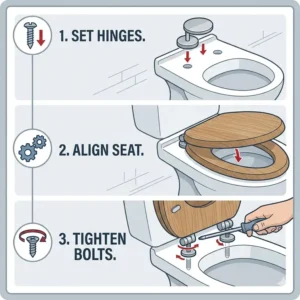
The “Two-Week Tighten”: After the first 14 days of use, the washers will have compressed and the seat will likely have a tiny bit of play. Take 30 seconds to tighten the nuts once more. This prevents the “shear force” that snaps bolts.
-
The Cleaning Protocol: NEVER use bleach on a wooden seat. Bleach is a base that breaks down the resin in molded wood and the cellular structure of solid wood. Instead, use a simple solution of mild dish soap and warm water.
-
The “Vapor Barrier” Trick: If you have a small bathroom, always leave the door open after a shower. Constant steam is the enemy of wood finishes. If you see “blistering” on the underside of the seat, your bathroom is too humid.
-
Hinge Lubrication: If you have metal hinges, a tiny drop of mineral oil once a year prevents the “grinding” sound and keeps the chrome from seizing up.
How to Choose the Right wooden toilet seats for Your Home
Choosing a seat isn’t just about picking a color. You need to evaluate your specific household dynamics. Here is my 4-step framework for making the right call:
-
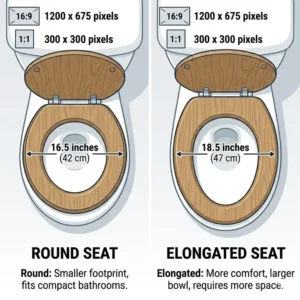
Identify Your Shape: This is the most common mistake. Measure from the center of the mounting holes to the very front of the bowl.
-
16.5 inches: You need a Round seat.
-
18.5 inches: You need an Elongated seat.
-
Expert Tip: If you’re at 17.5 inches, you likely have an older custom bowl; look for seats with adjustable hinges.
-
-
Evaluate the “Slam Factor”: Do you have kids or do you use the bathroom at night? Look for “Slow-Close” or “Whisper-Close” technology. Most wooden seats are heavy; if they fall, they fall hard.
-
Hinge Material Matters:
-
Plastic Hinges: Great for budget and easy cleaning.
-
Metal Hinges: Superior for aesthetics and “no-wiggle” stability.
-
-
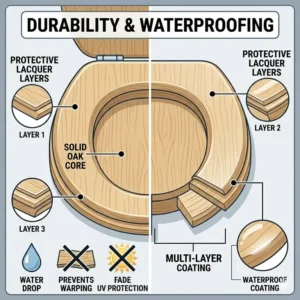
Finish Type: Look for “multi-coat” or “high-gloss” finishes. These are non-porous and prevent the wood from absorbing odors—the number one complaint with cheap, poorly sealed wood seats.
Molded Wood vs. Solid Wood: The Hidden Engineering
When you’re browsing, you’ll see a massive price gap between molded and solid wood. Here’s what’s actually happening under the hood.
Molded wood is an engineered product. It’s made by grinding up scrap wood into a fine powder, mixing it with specialized resins, and pressing it into a mold at thousands of pounds of pressure. This makes it incredibly dense—often denser than natural wood. From an environmental standpoint, it’s a win because it uses sawdust that would otherwise be waste. The Forest Stewardship Council (FSC) often certifies these processes for sustainability.
Solid wood, on the other hand, is a luxury. It’s a single piece of timber. The “Why” behind the price is the seasoning process. Wood has to be kiln-dried to a very specific moisture content (usually around 6-8%) so it doesn’t warp when it hits your humid bathroom. In my experience, solid wood feels “softer” and more “alive” than molded wood, but it is more susceptible to scratching. If you have a cat that likes to jump on the toilet, molded wood’s harder resin finish is actually the better choice.
The “Hinge Crisis”: Why Your Seat Moves (and How to Fix It)
The most frequent complaint I hear is: “I bought a expensive wooden seat, but it still wiggles!”
The problem usually isn’t the seat; it’s the interface between the bolt and the porcelain hole. Porcelain holes are often slightly oversized. Traditional plastic bolts will “creep” over time as you sit and stand.
The Expert Solution: Look for seats with “Top-Tite” or “Stay-Tite” hardware. These systems use a specialized rubber bushing or a “snap-off” nut that fills the gap in the porcelain. If your seat didn’t come with these, you can buy a $5 “toilet seat tightening kit” which consists of rubber washers that act as shock absorbers. This protects the wood from the lateral stress that eventually causes the hinge to pull out of the wood itself.
Features That Actually Matter (And Those That Don’t)
In 2026, marketing departments love to add “fluff” to bathroom fixtures. Here’s my filter for what adds value:
-
Matters: Antimicrobial Coatings. Some modern wood seats now have silver-ion technology baked into the finish. Since wood is naturally more porous than plastic, this is a legitimate hygiene upgrade.
-
Matters: Zinc-Plated Screws. Wood seats are held together by screws. If those screws aren’t zinc-plated or stainless steel, they will rust and snap within two years.
-
Doesn’t Matter: “Designer” Branding. A “designer” name on the box often means you’re paying a 40% markup for the same molded wood core used by Mayfair or Bemis. Focus on the hinge weight and the finish thickness instead.
-
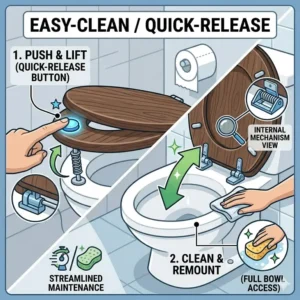
Doesn’t Matter: Quick-Release on Solid Wood. If you have a $150 solid walnut seat, you shouldn’t be popping it off and tossing it in the tub. You should be spot-cleaning it by hand. Quick-release is for plastic and molded wood family seats.
Common Mistakes When Buying wooden toilet seats
As a consultant, I’ve seen some hilarious (and expensive) blunders. Avoid these:
-
The “Abrasive” Disaster: Using scouring pads on wood. This creates micro-scratches that trap bacteria and turn the seat yellow. Use a soft microfiber cloth only.
-
Ignoring the Bumpers: If a bumper falls off the bottom of your seat, replace it immediately. Operating a wooden seat with a missing bumper puts “torsional stress” on the wood grain, which will lead to a snap right down the middle.
-
Wrong Hinge Finish: Matching chrome hinges with brushed nickel faucets. It sounds petty, but in a small bathroom, the “clash” of metals is the first thing a guest will notice.
-
Over-Tightening: If you don’t have a “snap-off” nut, don’t go full-strength with a wrench. You can actually crack the porcelain of the toilet bowl, which turns a $50 upgrade into a $500 plumbing nightmare.
Environmental Impact: Is Wood Truly “Greener”?
There is a lot of debate about whether wooden toilet seats are better for the planet than plastic ones. According to the Environmental Protection Agency (EPA), waste reduction is a key pillar of sustainability.
Plastic seats are petroleum-based and, if they break, they stay in a landfill for centuries. Molded wood seats are primarily made from wood byproducts and resins. While the resins aren’t always biodegradable, the bulk of the material is. Furthermore, high-quality wooden seats tend to be repaired rather than replaced. I’ve seen 30-year-old brass-hinged wood seats that just needed a fresh coat of polyurethane to look brand new. That kind of longevity is the ultimate form of “green” living.
Safety and Weight Capacities: What You Need to Know
A common concern for “Big and Tall” users is whether wood can support them.
-
Standard Plastic Seats: Often rated for 250-300 lbs. They tend to “splay” or flex outward under heavy loads.
-
Molded Wood Seats: Generally rated for 300-400 lbs. Their rigid structure doesn’t flex, making them feel much more secure.
-
Solid Wood: These are the titans. A 1-inch thick solid oak seat is virtually indestructible under normal residential use.
If you are looking for a seat for a senior or someone with mobility issues, the stability of wood is a major safety feature. It provides a solid “platform” that doesn’t shift during transitions, which is a key recommendation in many Universal Design guides.
✨ Upgrade Your Bathroom Today!
🔍 Ready to make the switch? These products aren’t just utilities; they are the foundation of a more comfortable, stylish home. Click any link to see the latest 2026 models and user ratings!
Conclusion: Why Wood Still Wins in 2026
After testing dozens of models and overseeing countless bathroom remodels, my verdict is clear: wooden toilet seats are the superior choice for anyone who values tactile comfort, thermal stability, and a classic aesthetic. While plastic has its place in commercial settings or ultra-modern “minimalist” labs, the home deserves the warmth of natural materials.
Whether you choose the “bulletproof” Mayfair 148CHSL or the artisanal Kohler K-4648, you are making an investment in your daily comfort. Just remember: treat the wood with respect, avoid the bleach, and check those bolts every once in a while. Your bathroom—and your morning mood—will thank you.
FAQs
❓ How do I fix a scratch on my wooden toilet seat?
✅ For minor scratches on solid wood, a matching furniture repair marker works wonders. For molded wood with a high-gloss finish, a tiny bit of automotive polishing compound can buff out surface scuffs, but be careful not to rub through the clear coat…
❓ Are wooden toilet seats more hygienic than plastic?
✅ If the finish is intact, they are equal. Modern high-density finishes are non-porous. However, if the finish cracks, wood can absorb moisture. This is why I stress using non-abrasive cleaners to keep the protective seal perfectly smooth…
❓ Why did my wooden toilet seat turn yellow?
✅ This is usually “sun-tanning” or chemical damage. UV light from a bathroom window can darken natural wood, while harsh cleaners like bleach or ammonia can react with the topcoat, causing a permanent yellowish tint…
❓ Can I use a bidet attachment with a wooden seat?
✅ Yes, but with a caveat. Bidets often “lift” the back of the seat, creating a gap. You MUST use “seat bumpers” (spacers) to level the seat, or the weight will snap the wooden lid where it meets the hinge…
❓ Do wooden seats fit all toilet brands?
✅ Most conform to standard American sizes (Round vs. Elongated). However, brands like Kohler or TOTO sometimes have “proprietary” shapes. Always check if your bowl has a French Curve or a “one-piece” design before buying…
Recommended for You
- 5 Best French Curve Toilet Seat Options for a Perfect Fit: 2026 Expert Guide
- Curved Toilet Seat: 7 Amazing Seats for Ultimate Comfort in 2025 🚽✨
- Toilet Seat for One Piece Toilet: Your Expert Guide to a Perfect Fit Using Top 2025 Selections
Disclaimer: This article contains affiliate links. As an Amazon Associate, I earn from qualifying purchases. If you purchase products through these links, we may earn a small commission at no additional cost to you.
✨ Found this helpful? Share it with your friends! 💬🤗
[addtoany]
