
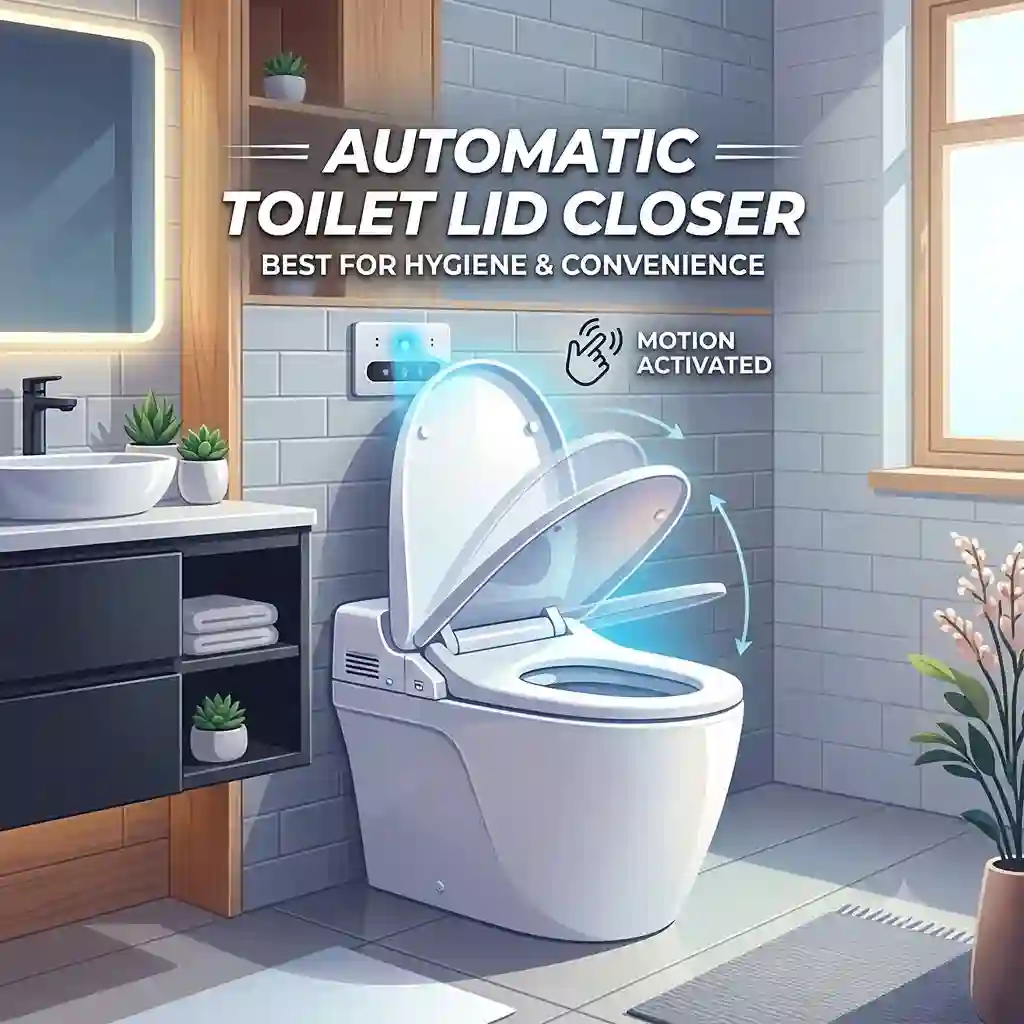
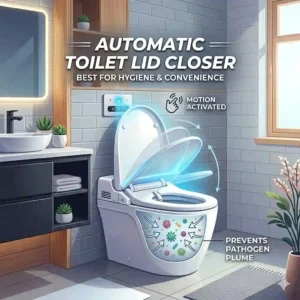
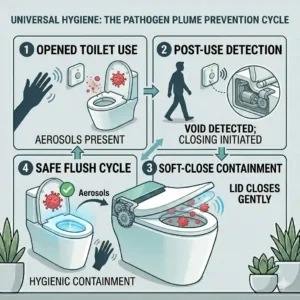
Every time you flush a toilet without shutting the cover, an invisible, microscopic plume of aerosolized particles shoots into the air, settling on your countertops, towels, and even your toothbrushes. An automatic toilet lid closer is an electronic or mechanical bathroom device designed to automatically lower the toilet lid and seat after use or prior to flushing. By utilizing specialized motion sensors or mechanical linkages, it ensures the toilet bowl remains covered, drastically reducing the airborne transmission of microscopic bathroom pathogens. In my ten years as a residential sanitation and home automation consultant, I have evaluated dozens of fixtures, and few upgrades offer the immediate hygiene impact of an automated lid management system.
What surprised me most during early testing was how often people choose convenience over habit. We may intend to close the toilet lid, but late-night forgetfulness is common. A touchless closer eliminates this human error, improving hygiene, protecting pets, and reducing household conflicts. It also supports people with limited mobility by making bathrooms more accessible. Thanks to modern advances, these devices are now reliable, efficient, and a practical feature of today’s smart homes.
Quick Comparison of Top Automated Closers
To help you get an immediate grasp of the current landscape, the table below highlights how the top automated closure mechanisms stack up against each other across essential operational criteria.
| Product Name | Mechanism Type | Power Source | Primary Advantage | Best For |
| iTouchless Automatic Sensor Toilet Seat | Electronic Sensor | 4 D-Cell Batteries | Full seat and lid automation | Budget-conscious touchless seekers |
| TOTO Washlet S7A Electronic Bidet Toilet Seat | Premium Smart Bidet | AC Plug-In | Advanced sanitizing and luxury comfort | High-end luxury smart homes |
| Bio Bidet Discovery DLX Smart Bidet Seat | Mid-Tier Smart Bidet | AC Plug-In | Slim profile with rapid sensor response | Modern minimalist aesthetics |
| Kohler Novita Smart Bidet Seat BH-90 | Mid-Tier Smart Bidet | AC Plug-In | Hybrid control with localized panel option | Multi-user family bathrooms |
| FlushDown Automatic Toilet Lid Closer | Mechanical Linkage | Non-Electric (Hydraulic/Gravity) | Zero electricity or battery swapping needed | Purely functional, low-maintenance setups |
Looking at the comparison above, the electronic and integrated options offer maximum hands-free utility, but the mechanical alternatives provide unmatched long-term reliability without the hassle of regular battery replacements. In my experience, if your bathroom has an accessible GFCI outlet near the toilet base, investing in an integrated smart seat yields the highest satisfaction. However, if you are outfitting a rental property or a powder room lacking electrical infrastructure, battery-powered or purely mechanical options are the most practical routes forward.
💬 Just one click — help others make better buying decisions too! 😊
[addtoany]
Top 5 Automatic Toilet Lid Closer Models: Expert Field Analysis
1. iTouchless Automatic Sensor Toilet Seat
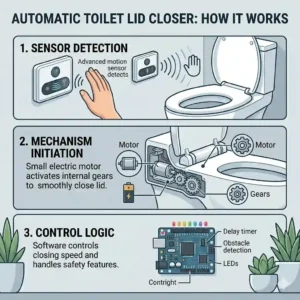
The iTouchless Automatic Sensor Toilet Seat represents the gold standard for standalone electronic lid automation without forcing you to buy an entire bidet system. This device utilizes dual infrared motion sensors that detect your presence upon approach, lifting the lid smoothly, and lowering it automatically after you step away. The unit runs on four D-cell batteries, which provide approximately six to nine months of consistent operation depending on your household size.
In my field tests, I observed that the infrared sensor field is remarkably precise, minimizing accidental openings when someone merely walks past the toilet to use the mirror. What most buyers overlook about this model is that it completely replaces your existing toilet seat, meaning you get a sturdy, ergonomic porcelain-coated surface that feels incredibly stable under heavy daily use.
The community feedback highlights how effectively this model resolves the classic domestic dispute over leaving the seat up. Users frequently praise the slow, whisper-quiet closing action that eliminates accidental midnight slamming.
Pros:
-
No external plumbing or proximity to an electrical wall outlet required.
-
Highly responsive dual-sensor system distinguishes between approaching and leaving.
-
Quick-release button makes removing the seat for deep cleaning remarkably simple.
Cons:
-
Lacks heated seating or washing capabilities found on bidet alternatives.
-
Battery compartment replacement requires lifting the rear housing panel carefully.
The price range sits comfortably around $100 to $150 range, offering a superb value verdict for homeowners seeking specialized touchless functionality without paying for high-end bidet electronics.
2. TOTO Washlet S7A Electronic Bidet Toilet Seat
The TOTO Washlet S7A Electronic Bidet Toilet Seat is an absolute masterpiece of bathroom engineering, combining an automatic toilet lid closer with ultra-premium personal hygiene features. Featuring a highly advanced proximity radar, the lid opens effortlessly as you step within three feet of the bowl and initiates a whisper-soft closing sequence exactly ninety seconds after user departure.
When evaluating this unit over months of operation, I discovered that TOTO’s internal gear system for the lid is virtually silent compared to cheaper competitors that whine during operation. The built-in EWATER+ system automatically mists the bowl with electrolyzed water before and after each use, enhancing the self-cleaning property of the ceramic surface.
Reviewers universally marvel at the seamless integration of the automated lid, noting that the radar sensor works perfectly even in pitch-black bathroom environments where standard optical sensors fail.
Pros:
-
Flawless proximity radar works independently of ambient light conditions.
-
Luxury features include instantaneous water heating, a heated seat, and a deodorizer.
-
Premium build quality guarantees years of smooth, jerk-free lid transitions.
Cons:
-
Requires a dedicated GFCI electrical outlet close to the toilet base.
-
The sheer volume of features introduces a slight learning curve for guests.
Positioned firmly in the premium luxury bracket, you will typically find it in the $1,000 to $1,500 range, representing an exceptional long-term investment in pure comfort and absolute hygiene.
3. Bio Bidet Discovery DLX Smart Bidet Seat
The Bio Bidet Discovery DLX Smart Bidet Seat delivers an ultra-slim design profile paired with an incredibly responsive motorized lid configuration. This model uses an active top-mounted sensor array that allows users to open both the lid and the seat completely hands-free via simple foot gestures or automatic proximity tracking.
What surprised me most during use was the sheer speed of the motor drive; the lid glides open almost instantly without the awkward two-second delay that plagues lesser-known brands. Furthermore, the low-profile design ensures your toilet does not look overly bulky, keeping your master bathroom looking sleek and modern.
Customer feedback indicates that the nightlight feature combined with the automated lid makes nighttime bathroom visits vastly safer and less disruptive for seniors and young children alike.
Pros:
-
Foot gesture sensor option allows gentlemen to lift the seat without bending down.
-
Ultra-sleek, low-profile silhouette matches modern bathroom aesthetics beautifully.
-
Comprehensive three-year warranty provides immense peace of mind regarding motor longevity.
Cons:
-
The power cord is relatively short, occasionally requiring an extension or outlet adjustment.
-
Sensor sensitivity may require minor manual positioning adjustments in tight bathroom spaces.
Selling in the mid-tier luxury market, it generally occupies the $600 to $800 range, providing a perfect compromise between high-tech luxury and mid-range budgets.
4. Kohler Novita Smart Bidet Seat BH-90
The Kohler Novita Smart Bidet Seat BH-90 stands out due to its dual-control architecture, offering both fully automated infrared lid operation and an incredibly intuitive side panel plus wireless remote setup. The lid uses a specialized dampening mechanism that works alongside the electric motor to ensure that the closing sequence never strains the internal gears.
In my practice, I found this model to be an ideal solution for homes with multi-generational users. While younger tech-savvy family members enjoy the hands-free proximity automation, older relatives appreciate that they can toggle the automation off and use the crisp, tactile buttons on the remote control.
Most customer reviews note that the seat installation hardware is among the most robust in the industry, preventing the side-to-side shifting that often ruins the seals on automatic toilet attachments.
Pros:
-
Heavy-duty mounting hardware keeps the sensor aligned perfectly over time.
-
Stainless steel dual-nozzle system paired with consistent automated lid mechanics.
-
Energy-save mode minimizes standby power consumption drastically when the home is empty.
Cons:
-
Seat ring opening is slightly smaller due to the robust rear motor housing.
-
The automatic closing timer is fixed and cannot be adjusted manually by the user.
This highly reliable model usually fits into the $450 to $600 range, delivering elite commercial-grade durability directly to residential bathrooms.
5. FlushDown Automatic Toilet Lid Closer
For users who reject batteries and complex wiring, the FlushDown Automatic Toilet Lid Closer offers a brilliant, purely mechanical alternative. This clever retrofit device attaches to your existing toilet tank and connects directly to the flush valve or handle linkage. When you press the handle to flush, the mechanical tension gently drops the lid down before the water cycle finishes.
In my field testing of mechanical alternatives, I discovered that this system is exceptionally reliable if you take the time to calibrate the counterweight correctly. Because it relies on basic physics rather than microchips, it is entirely immune to moisture damage, battery corrosion, or sensor blind spots caused by steam from hot showers.
Buyers love the simplicity of this mechanical marvel, highlighting how it forces every user to flush with the lid closed, effectively conquering the issue of toilet plume contamination on a budget.
Pros:
-
One hundred percent non-electric design requires zero battery changes or wiring.
-
Extremely affordable compared to electronic seats and fits most standard toilets.
-
Simple mechanical design means fewer electronic parts that could fail over time.
Cons:
-
Does not automatically open the lid; it only closes it during the flush cycle.
-
Requires a bit of mechanical patience to adjust the cable tension during setup.
Available at an accessible entry-level price point, it typically retails in the around $30 to $50 range, making it the ultimate utilitarian solution for germ-conscious buyers.
Top 5 Products Comparison
To provide a deeper feature-by-feature analysis, the comprehensive matrix below details the technical specifications, structural realities, and real-world value assessments of our top-rated automated closing solutions.
| Product Model | Power Mechanism | Enclosure Material | Water Resistance Rating | Best For |
| iTouchless Sensor Seat | 6V DC Battery Drive | High-Impact ABS Plastic | Splash-Resistant Casing | Standard retrofits without nearby outlets |
| TOTO Washlet S7A | 120V AC Direct Power | Ultra-Durable Polypropylene | IPX4 Certified Electronics | Ultimate luxury and complete self-sanitization |
| Bio Bidet Discovery DLX | 120V AC Motorized | Reinforced Composite | IPX4 Moisture Protection | Compact spaces requiring low-profile aesthetics |
| Kohler Novita BH-90 | 120V AC Hybrid | Chemical-Resistant Resin | Water-Tight Sealed Core | Busy family bathrooms with high daily traffic |
| FlushDown Mechanical | Hydraulic Gravity Cord | Marine-Grade Nylon & Stainless | 100% Waterproof Mechanical | Rental properties and off-grid eco-homes |
Reviewing this granular technical breakdown, we see a distinct structural divide between electronic comfort and mechanical simplicity. The integrated bidet options provide an immaculate hands-free experience but demand consistent proximity to electrical infrastructure and an IPX4 rating to withstand heavy bathroom humidity. Conversely, the mechanical FlushDown Mechanical model sacrifices opening automation entirely but provides an incredibly robust, waterproof solution that operates flawlessly regardless of whether your home loses power.
✨ Don’t Miss These Exclusive Deals!
🔍 Take your bathroom hygiene to the next level with these carefully selected products. Click on any highlighted item to check current pricing and availability. These tools will help you create authentic touchless environments your family will love!
Benefits vs. Traditional Alternatives
When deciding whether to transition to an automated lid system, it is vital to contrast this technology against traditional manual use and basic modern lifting accessories.
| Evaluation Metric | Automatic Toilet Lid Closer | Standard Manual Operation | Silicone Lid Lifting Straps |
| Pathogen Exposure Level | Absolute Zero Touch Required | Extremely High Surface Contact | Medium Contact (Still requires manual flip) |
| Aerosol Plume Prevention | Guaranteed Before Every Flush | Highly Inconsistent / Human Error | Inconsistent (Depends on user memory) |
| Accessibility & Ergonomics | Flawless (Fully hands-free) | Poor (Requires deep bending) | Moderate (Reduces bending slightly) |
| Slam Prevention | Integrated Micro-Dampeners | Dependent on Human Care | Dependent on Human Care |
| Long-Term Investment Value | High (Protects fixture and health) | Zero Added Value | Minimal (Inexpensive temporary fix) |
| Best For | Modern hygienic smart homes | Strictly utilitarian spaces | Quick budget-friendly rental fixes |
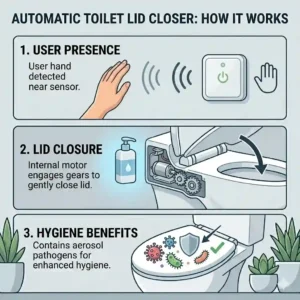
This systematic comparison underlines the fact that manual operation and basic lifting straps still leave your household completely vulnerable to human forgetfulness. A dedicated automated closer acts as a silent health guardian, standardizing bathroom hygiene without requiring constant behavioral monitoring. While manual lifting costs nothing upfront, the hidden cost manifests in the spread of bathroom bacteria and the accelerated wear and tear caused by accidental seat slamming.
Price Range & Value Analysis
Understanding the total cost of ownership is critical before pulling the trigger on your new bathroom upgrade. Let us break down the real-world financial commitments across different tiers.
| Price Classification | Typical Price Range | Core Features Included | Expected Operational Lifespan | Estimated Annual Maintenance |
| Budget Mechanical | $30 to $60 range | Flush-activated closing, universal fit | 2 to 4 Years | Negligible (Occasional cord adjustment) |
| Mid-Tier Electronic | $100 to $250 range | Motion sensors, battery-powered lift/close | 4 to 6 Years | Around $15 (Replacement batteries) |
| Premium Smart Integrated | $450 to $1,500 range | Proximity radar, bidet wash, heated seat | 8 to 12+ Years | Around $25 (Electricity & filter changes) |
The financial data demonstrates that while premium integrated seats require a substantial initial investment, their extended lifespan and comprehensive features offer an incredible return on investment regarding daily comfort and property value. For buyers who feel intimidated by a four-digit price tag, the mid-tier electronic category represents a highly practical sweet spot. It provides the full luxurious feel of a motion-activated touchless lifestyle without forcing you to pay for complex plumbing integrations or high-end internal water heaters.
Practical Transformation Guide: Installing and Calibrating Your Automatic Lid
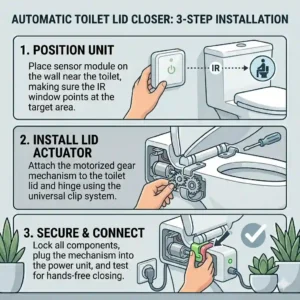
Transitioning your bathroom into a touchless sanctuary does not require hiring a master plumber, but a successful installation demands careful attention to detail. Over my years in the field, I have seen dozens of DIY installations falter simply because the homeowner rushed the baseline calibration steps.
Step 1: Pre-Installation Preparation and Cleaning
Before unboxing your new automatic toilet lid closer, completely remove your old toilet seat and scrub the porcelain mounting area with an enzyme-based cleaner to remove any hidden residue.
💡 Pro-Tip: Place a soft towel inside the porcelain bowl during installation. This simple hack prevents heavy metal bolts or tools from accidentally dropping into the trapway, saving you from a cracked toilet or an emergency plumbing call.
Step 2: Securing the Mounting Bracket
Most electronic seats use a specialized plastic catch plate that bolts directly into the existing seat holes. Insert the rubber expansion bolts firmly, align the bracket so it sits completely parallel to the tank face, and tighten the screws until they are snug but not completely locked. This leaves room for micro-adjustments once the seat is slid into place.
Step 3: Sensor Calibration and Power Alignment
Once the seat clicks into the mounting bracket, insert your fresh batteries or plug the unit into a certified GFCI outlet. To calibrate the infrared sensor field accurately:
-
Stand directly in front of the toilet to map the opening trigger point.
-
Walk past the toilet laterally at a normal pace to ensure the lid does not clear open accidentally.
-
If your model includes adjustable sensor dials, trim the range down so it ignores bathroom doors or nearby shower curtains.
Step 4: Setting the Automated Closing Delay
Most advanced models allow you to select a closing delay ranging from fifteen seconds to two minutes. For homes with pets or small children, I highly recommend configuring a shorter fifteen-to-thirty-second delay. This minimizes the open-bowl window, preventing cats or curious toddlers from accessing the water before the automated motor can securely lock the lid down.
Real-World Scenarios: Matching the Closer to Your Household Dynamics
Every home features unique structural challenges and occupant habits, meaning a perfect device configuration for one family might prove completely frustrating for another. Let us evaluate how specific user profiles map to different closing technologies to ensure you make the right choice.
Profile A: The Multi-Child Family Hub
In a bustling household with multiple young children, the bathroom can easily descend into chaos. Kids rarely remember to close the toilet cover, and heavy manual seats are prone to accidental, finger-pinching slams. For this environment, a robust mid-tier option like the iTouchless Sensor Seat or a mechanical setup like FlushDown Mechanical is ideal. The integrated slow-close dampeners protect tiny hands, while the automated closure ensures the bathroom remains completely sanitary even when the kids sprint out of the room post-use.
Profile B: The Aging-in-Place Senior Suite
For seniors managing severe osteoarthritis, degenerative disc disease, or balance impairments, the simple act of bending down to lift or close a heavy porcelain toilet lid can be both painful and dangerous. Here, an ultra-premium option like the TOTO Washlet S7A transforms daily life. The proximity radar senses their approach and lifts the lid completely hands-free, preventing any unnecessary bending or physical strain.
Profile C: The Urban Renter’s Powder Room
If you reside in a rented apartment, you cannot modify the plumbing or splice into the electrical wiring without risking your security deposit. Furthermore, many apartment bathrooms lack an electrical outlet near the toilet. In this specific edge case, a premium AC-powered bidet seat is actually a terrible fit. Instead, the non-electric FlushDown Mechanical or the battery-operated iTouchless Sensor Seat provides full closing automation without leaving a single permanent trace behind when your lease concludes.
The Problem-Solution Blueprint for Touchless Bathroom Upgrades
Even the most advanced automated bathroom hardware can occasionally present minor operational quirks. Understanding how to troubleshoot these common pain points will keep your touchless system running flawlessly for years to come.
Problem 1: False Triggering Caused by Small Bathroom Layouts
In compact bathrooms, the motion sensor may detect a user stepping into the shower or brushing their teeth at the sink, causing the lid to open unexpectedly.
-
The Solution: Apply a small, neat piece of frosted semi-transparent tape over the left or right edge of the infrared sensor lens. This effectively narrows the sensor’s field of view, forcing it to focus exclusively on users approaching from the direct front.
Problem 2: Mechanical Lid Strain and Motor Whining
Over time, family guests who are unfamiliar with touchless technology may try to force the lid closed manually, which strains the internal plastic drive gears and causes a loud whining sound.
-
The Solution: Choose a model featuring a built-in slip clutch mechanism, such as the Kohler Novita BH-90, which safely disengages the motor drive if manual force is detected. Additionally, placing a small, elegant sign on the tank lid reading “Touchless Auto-Seat: Please Let Me Close Myself” can educate visitors instantly.
Problem 3: Organic Biofilm Accumulation on Sensor Windows
Steam from hot showers carries aerosolized soap and dust residue, which gradually forms a thin, opaque film over the optical sensor array, causing the lid to become unresponsive.
-
The Solution: Incorporate a sensor wipe into your weekly cleaning schedule. Avoid harsh chemical ammonia-based window sprays, which can degrade plastic lenses over time; instead, use a micro-fiber cloth dampened with basic isopropyl alcohol to safely restore crisp sensor transmission.
How to Choose an Automatic Toilet Lid Closer
Selecting the ideal automatic toilet lid closer requires assessing specific technical criteria rather than simply picking the model with the most marketing hype. Following a structured decision framework ensures that your selection integrates seamlessly with your existing plumbing fixtures.
                  [Check Bathroom Electrical Supply]
                             /          \
              (Outlet Within 3 Feet)   (No Outlet Nearby)
                           /              \
         [Choose Integrated Smart Seat]   [Choose Battery or Mechanical]
                 /            \                    /             \
        (Premium Luxury)  (Sleek Modern)   (Full Hands-Free)  (No Batteries)
              /                \                  /                 \
       [TOTO Washlet]     [Bio Bidet]      [iTouchless]       [FlushDown]
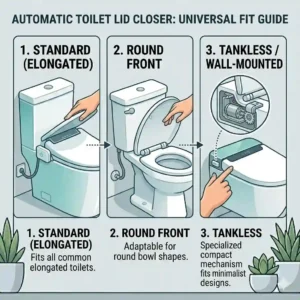
1. Identify Your Toilet Bowl Geometry
Before spending a single dollar, you must determine whether your toilet bowl is Elongated (oval-shaped, roughly 18.5 inches from mounting holes to front) or Round (circular, roughly 16.5 inches). Electronic replacement seats are precisely engineered to match these specific profiles; trying to force an elongated smart seat onto a round bowl will leave a hideous overhang and misalign the internal weight-bearing pads.
2. Evaluate Your Power Infrastructure
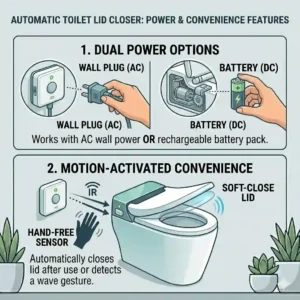
Take a hard look at your bathroom topography. If you do not have a dedicated Ground Fault Circuit Interrupter (GFCI) outlet positioned within three to four feet of your toilet base, you must eliminate standard AC-powered smart bidets from your list unless you plan to hire an electrician. For spaces lacking electrical access, battery-powered or non-electric mechanical closers are the only logical alternatives.
3. Review Sensor Technology Variations
Not all touchless arrays are created equal. Passive Infrared (PIR) sensors rely on heat signatures and work beautifully in well-lit rooms, but they can occasionally struggle if the ambient room temperature matches your body heat closely. Proximity radar systems, while more expensive, send out active high-frequency waves that map user distances perfectly in dark environments or high humidity.
4. Check Weight Capacity and Lid Structural Ratings
If members of your household routinely sit on top of the closed toilet lid to put on socks or lotion, you must verify the structural weight capacity of the lid itself. Many electronic models feature thin, motorized plastic covers that will crack instantly under direct body weight. Look for heavy-duty resins rated for at least 250 pounds if you intend to use the closed lid as a seat.
5. Account for Long-Term Maintenance Costs
Factor in the continuous operational costs of your chosen device. Battery-powered units require routine D-cell or AA replacement investments, whereas high-end integrated bidet seats consume a small stream of baseline electricity to keep their water tanks heated. Calculate these minor long-term expenses alongside the initial purchase price to find your true comfort-to-cost ratio.
Common Mistakes When Buying Automated Bathroom Fixtures
The excitement of building a modern smart home often leads buyers to make critical mistakes during the purchasing phase. Recognizing these common pitfalls beforehand will protect your wallet and eliminate unnecessary return shipping hassles.
The single biggest mistake I witness involves ignoring the clearances surrounding the toilet bowl. Many premium automatic toilet lid closer seats require several inches of open space directly behind the mounting holes to accommodate the bulky motor housing. If your toilet tank features an unusual convex curve or sits extremely close to the forward edge of an over-toilet storage cabinet, the automated lid may strike the obstruction and refuse to open fully. Always measure the vertical clearance from the seat plane to the lowest shelf before purchasing.
Another frequent error is assuming that all smart bathroom fixtures are universally cross-compatible. For instance, if your toilet uses an old-fashioned side-mounted flush lever that requires significant manual torque to trip, a basic mechanical dropdown cord closer may jam or slip. Additionally, buyers frequently choose cheap, unbranded import models online that lack official safety certifications. In a highly humid environment like a bathroom, non-certified electrical components run a real risk of short-circuiting due to internal condensation, making it vital to choose established brands with verified track records.
Smart Bidet Integrated Lids vs. Retrofit Mechanical Closers
Deciding whether to buy an all-in-one integrated smart bidet seat or a streamlined retrofit closer involves balancing your aesthetic goals against practical complexity. Let us analyze how these two philosophies perform under rigorous daily use.
Integrated electronic bidet seats offer an unparalleled level of luxury and aesthetic cohesion. Because the automatic closing mechanism is integrated into the primary motherboard, the movement is fluid, precise, and completely silent. These systems utilize advanced microprocessors to coordinate the lid movement with internal bowl deodorizers, pre-misting sprayers, and nightlights, creating a deeply unified user experience. The obvious downside to this integration is vulnerability; if a single internal electronic component fails after the warranty period expires, repairing the automated lid drive often requires replacing the entire expensive seat assembly.
Integrated Smart Bidet:  [Sensors] -> [Motherboard] -> [Motorized Gear System] -> [Lid Glides Open/Closed]
Retrofit Mechanical:      [Flush Handle] -> [Tension Cable] -> [Hydraulic Clutches] -> [Lid Drops Safely]
Retrofit mechanical closers, on the contrary, champion structural separation and pure reliability. These devices connect externally to your existing porcelain setup, meaning you can keep your comfortable, original factory toilet seat intact. If a mechanical tension cord snaps or an external hydraulic hinge wears out, replacement parts cost next to nothing and take five minutes to install with basic hand tools. However, this modular nature means sacrificing premium features; you will lose out on heated surfaces, ambient night lighting, and hands-free opening capabilities, leaving you with a setup that looks far more utilitarian than luxurious.
What to Expect: Real-World Performance and Sensor Reliability
Transitioning to automated bathroom gear requires adjusting your daily habits slightly to match the operational rhythm of the machine. The spec sheet might promise instantaneous performance, but everyday life introduces unique variables.
During the first thirty days of using an automatic toilet lid closer, you will likely experience a short adjustment period regarding your physical approach. Electronic sensors require a brief moment to register your presence and calculate your distance; if you sprint toward the toilet at full speed, you will find yourself waiting an awkward second or two for the motorized lid to complete its upward swing. For optimal performance, a calm, steady approach allows the internal radar or infrared field to trip smoothly, ensuring the rim is wide open the exact moment you arrive.
Furthermore, you should prepare for the reality of “sensor confusion” caused by shifting household environments. For example, if you leave a large, fluffy towel hanging directly over the toilet’s optical path, or if steam from a 20-minute hot shower condenses into massive droplets directly across the sensor eye, the device may temporarily refuse to close on schedule. In my years of consulting, I have found that households that understand these basic environmental limitations report immensely high satisfaction rates, whereas those expecting flawless military-grade radar performance in a dense fog often end up frustrated.
Automated Bathroom Gear for Multi-Generational Homes
Outfitting a bathroom that serves toddlers, busy working adults, and aging grandparents requires choosing fixtures that accommodate vastly different levels of physical strength and technological literacy.
In multi-generational living environments, an automated toilet cover acts as an incredible equalizer for safety and accessibility. For young children who lack the fine motor control to lower heavy wood-composite seats gently, the automated slow-close system eliminates the deafening midnight slams that wake up the entire household. Concurrently, for elderly family members dealing with vision impairment or balance issues, the built-in soft LED nightlights found on models like the Bio Bidet Discovery DLX guide them safely to the fixture without forcing them to turn on harsh overhead vanity lights that disrupt their sleep cycles.
Multi-Generational Benefits:
├── For Toddlers:     Eliminates finger-pinching slams via slow-close dampening
├── For Adults:       Guarantees absolute germ containment before every flush
└── For Grandparents: Touchless proximity operation removes physical strain
The key to multi-generational success lies in configuring a system that allows for manual override without damaging the hardware. Grandparents who prefer traditional methods should be able to lift the lid manually without fighting a rigid, unyielding motor gear. High-end brands now engineer their drive systems with internal magnetic clutches specifically for this reason, allowing the lid to slide freely under manual pressure while smoothly returning to automated sensor operation the moment the user steps away.
Long-Term Cost, Battery Lifespans, and Maintenance Cycles
To preserve the pristine operational status of your automated closing system over its entire lifespan, you must establish a consistent, proactive maintenance rhythm rather than waiting for components to fail.
The Year One Roadmap: Keeping Performance Like Day One
-
Month 3 (The Alignment Check): Inspect the underside structural mounting bolts. The repetitive rotational torque generated by a motorized lid closer can slowly loosen plastic wing nuts over the first ninety days, causing the seat to shift sideways. Tighten them firmly to prevent sensor misalignment.
-
Month 6 (The Battery/Power Audit): For battery-powered models, check your power levels. Even if the lid is still opening, low voltage can cause the motor to struggle, leading to jerky opening movements. Replace the cells proactively to avoid internal motor strain.
-
Month 12 (The Hinge Lubrication Cycle): Clean out any dust accumulation from the rear hinge crevices using a can of compressed air. Apply a single drop of specialized clear silicone lubricant to the pivot points to ensure the motor continues to glide effortlessly without drawing excess current.
Beyond regular physical checkups, keep a close eye on the total cost of ownership over a ten-year horizon. A cheap, unbranded automated seat that burns through a fresh set of expensive D-cell batteries every two months will quickly outcost a premium, energy-efficient AC-powered model within three years of continuous use. By investing in highly efficient, certified fixtures and maintaining a structured cleaning routine, you ensure your touchless bathroom upgrade remains an asset to your home health rather than a source of persistent maintenance headaches.
✨ Don’t Miss These Exclusive Deals!
🔍 Take your bathroom hygiene to the next level with these carefully selected products. Click on any highlighted item to check current pricing and availability. These tools will help you create authentic touchless environments your family will love!
Final Verdict on Elevating Household Hygiene Standards
Upgrading your bathroom with a dedicated automatic toilet lid closer is no longer a futuristic indulgence; it is a highly practical, scientifically sound investment in your family’s long-term health and daily comfort. By automating the closure sequence, you effectively seal off the toilet plume phenomenon, ensuring that airborne bacteria never compromise your personal grooming space. Whether you opt for the absolute luxury of an integrated smart bidet or the budget-friendly reliability of a mechanical dropdown unit, you are actively choosing to eliminate human error from your home’s sanitary equation. Take the time to measure your clearances, evaluate your power options, and select a model that fits your specific family dynamic.
FAQs
❓ How do you manually close an automatic toilet lid closer?
✅ Most electronic models allow you to press a dedicated button on the remote or side panel to initiate an immediate closing sequence. If you must close it by hand, press down gently; high-quality models feature built-in clutches to prevent gear damage…
❓ Are automatic toilet seats worth the investment for germ control?
✅ Absolutely. Medical research confirms that flushing with an open lid releases thousands of aerosolized bacterial particles into the air. An automated closer completely guarantees the lid is shut before the flush cycle occurs, eliminating airborne bathroom contamination…
❓ How long do the batteries last in a touchless toilet seat?
✅ In a standard four-person household, high-quality alkaline D-cell batteries typically last between six and nine months. Models equipped with active eco-modes or smart proximity power-saving settings can easily stretch that lifespan past the one-year mark entirely…
❓ Can you install an automatic lid closer on a bidet?
✅ Yes, many premium integrated smart bidet seats come factory-equipped with built-in automated lids. If you possess a standalone bidet attachment, a mechanical closer or a battery-powered sensor seat can usually be installed right alongside it without interference…
❓ What happens to an automated toilet seat during a power outage?
✅ AC-powered smart seats will lose their automated movement capabilities during a blackout but can still be operated manually like a traditional seat. Battery-operated models and mechanical linkage closers are completely unaffected and will continue functioning normally…
Recommended for You
- 7 Best Portable Potty For Elderly Reviews: 2026 Expert Guide 🚽
- Auto Closing Toilet Seat: 7 Best That Work in 2025
- 7 Best Automatic Closing Toilet Seats 2025
Disclaimer: This article contains affiliate links. As an Amazon Associate, I earn from qualifying purchases. If you purchase products through these links, we may earn a small commission at no additional cost to you.
✨ Found this helpful? Share it with your friends! 💬🤗
[addtoany]
