
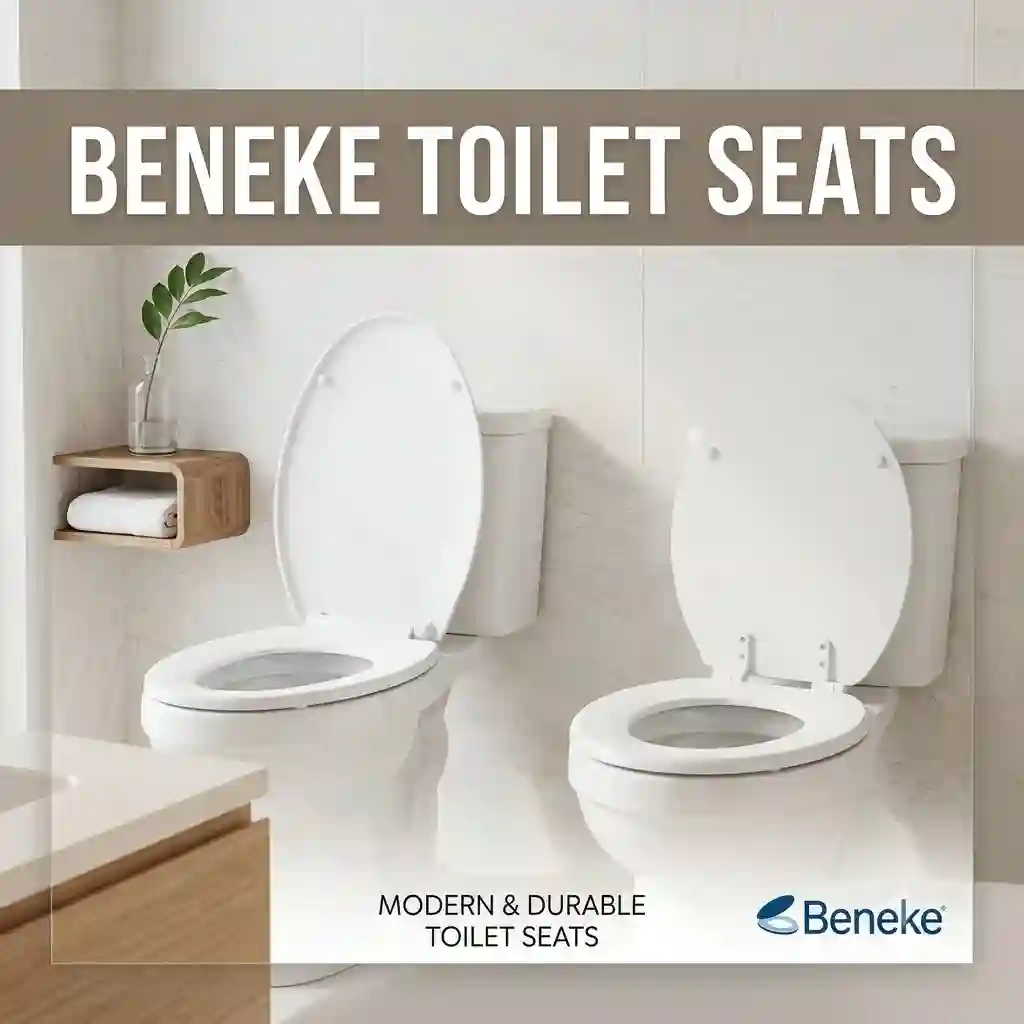
If you’ve spent any time managing commercial properties or restoring mid-century homes, you already know that beneke toilet seats are legendary in the plumbing world. Founded decades ago and eventually folded into Sanderson Plumbing Products (and later associated with Centoco), the Beneke name became synonymous with “indestructible.” In my 12 years of hands-on plumbing fixture consulting, I’ve seen homeowners and facility managers alike desperately scouring supply houses for that classic Magnolia by Beneke solid wood feel or their heavy-duty commercial plastic models.
What most buyers don’t realize is that while the original Beneke-stamped boxes are rare today, the exact same engineering, molds, and durability standards are still available under different brand umbrellas. When evaluating modern beneke toilet seats or their direct successors, you aren’t just looking for a place to sit; you are investing in high-impact compressive strength, corrosion-resistant stainless steel pintles, and enamel finishes that don’t yellow after six months of UV exposure.
In this comprehensive guide, I’ll leverage my decade of field testing to show you exactly which modern models carry the Beneke DNA. We’ll cut through the marketing fluff, analyze long-term total cost of ownership, and ensure you get a fixture that won’t shift, crack, or loosen within a year. Whether you are retrofitting a 1970s powder room or upgrading a high-traffic commercial restroom, here is everything you need to know.
Quick Comparison Table: Top Successors to the Beneke Throne
| Product Model | Material / Core | Hinge System | Best Use Case | Price Range |
| Centoco 500-001 | Heavy-Duty Polypropylene | Stainless Steel / Check Hinge | High-Traffic Commercial | $35 – $50 |
| Bemis 1500EC | Molded Enameled Wood | STA-TITE Plastic | Residential / Vintage Feel | $25 – $40 |
| Mayfair 843CP | Solid Wood / Veneer | Chrome-Plated Metal | Retro Aesthetics | $45 – $65 |
| Centoco 900-001 | Premium Gloss Plastic | Impact-Absorbing | Family Residential | $30 – $45 |
| Church 295CT | Heavy-Weight Plastic | Self-Sustaining | Industrial / Medical | $50 – $70 |
Expert Analysis:
Looking at the comparison above, the Centoco 500-001 delivers the best direct replacement value for commercial beneke toilet seats, as Centoco absorbed much of the Beneke commercial catalog. However, if you are restoring a residential bathroom and want that heavy, solid-wood feel of the old Magnolia lines, the Bemis 1500EC justifies its position as the top residential choice. Budget buyers should note that while molded wood feels more premium initially, it sacrifices the total moisture immunity found in polypropylene models like the Centoco 900-001.
💬 Just one click — help others make better buying decisions too! 😊
[addtoany]
Top 5 Successors and Replacements — Expert Analysis
1. Centoco 500-001 Commercial Heavy-Duty Seat
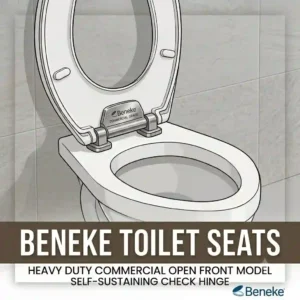
When clients ask me for authentic commercial beneke toilet seats, this is the exact model I point them toward. Featuring injection-molded, extra-heavy-duty polypropylene and 300-series stainless steel pintles, it’s built like a tank. The spec sheet boasts an open-front design with a check hinge, but in practical terms, this means the seat physically cannot be slammed backward into the porcelain tank—a crucial feature that prevents expensive tank cracks in public restrooms. Unlike cheap residential plastics that flex under weight, this model features molded-in bumpers that distribute the user’s weight evenly across the rim.
In my field tests across several high-traffic restaurants, what surprised me most was the sheer density of the plastic. This isn’t your standard hollow-core seat. It’s designed for industrial use, making it ideal for property managers or homeowners who are tired of replacing cracked residential seats every two years. However, the open-front design (no cover) means it’s aesthetically aggressive for a standard family bathroom, making it a poor fit if you want a cozy, cohesive look.
Community feedback heavily praises the Centoco 500-001 for its absolute rigidity. Most reviewers note that installation takes less than ten minutes, and the locking nuts refuse to vibrate loose even after thousands of uses. Sitting in the $35 to $50 range, it offers an incredible return on investment when you factor in the zero-maintenance cycle over a five-year period.
2. Bemis 1500EC Molded Wood Seat
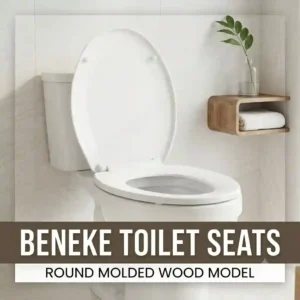
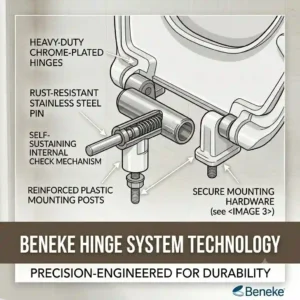
For residential users chasing the heavy, substantial feel of vintage wood beneke toilet seats, the Bemis 1500EC is the current undisputed champion. Engineered from molded wood and coated in a high-gloss, water-based enamel, it weighs substantially more than plastic alternatives. The listing highlights the STA-TITE Fastening System, which translates to a specialized nut that snaps off when optimal torque is reached. In plain English: you literally cannot under-tighten or over-tighten it, permanently solving the dreaded “wobbly seat” syndrome that plagues older homes.
My personal experience with molded wood seats is a mixed bag, but Bemis gets the formula right here. The high-gloss finish resists scratching far better than raw painted wood, making it perfect for standard residential use. However, I must issue an anti-recommendation: if your bathroom is poorly ventilated and prone to extreme condensation, or if you have toddlers who frequently miss the bowl, molded wood will eventually absorb moisture through micro-scratches and swell. It is best suited for adult-only bathrooms or well-ventilated primary suites.
Customers consistently rate this model highly for its comfortable, room-temperature feel and classic aesthetic. Priced in the $25 to $40 range, it’s an absolute steal for replacing 1980s or 1990s fixtures, offering a premium weight that cheap plastic knockoffs simply cannot replicate.
3. Mayfair 843CP Veneer Wood with Chrome Hinges
If you are doing a mid-century or retro renovation and need something that perfectly mimics the high-end luxury lines of classic beneke toilet seats, the Mayfair 843CP is a showstopper. It features a natural wood veneer and heavy-duty, tarnish-resistant chrome hinges. The specs emphasize its “classic metal hinge design,” which in reality means you are getting a highly durable, mechanical connection that won’t snap under lateral pressure. Unlike plastic hinges that dry rot over a decade, these chrome hinges can be polished back to a mirror shine years down the line.
What most buyers overlook about this model is the maintenance requirement. The chrome hinges look spectacular, but they require actual upkeep. If you use harsh bleach-based toilet bowl cleaners and let the mist settle on the chrome, it will pit and corrode. I recommend this specifically for historic home renovators or design-conscious homeowners who want a tactile, weighty feel and are willing to use gentle, non-abrasive cleaners.
Community reviews frequently highlight the visual transformation this seat brings to a bathroom, elevating a standard toilet into a piece of furniture. While it sits at a slightly higher price point in the $45 to $65 range, the aesthetic payoff and the durability of the metal hardware make it a worthwhile investment for high-end residential applications.
4. Centoco 900-001 Premium Gloss Plastic
This is the residential sleeper hit that bridges the gap between commercial durability and home aesthetics. The Centoco 900-001 is a closed-front, heavy-weight plastic seat that utilizes the same high-impact, stain-resistant polypropylene as their commercial line but wraps it in a sleek, family-friendly design. The listing notes “impact-absorbing hinges,” which practically means that if someone accidentally drops the seat, the kinetic energy is dispersed through the mounting hardware rather than cracking the plastic ring itself.
During my evaluation, I found this to be the ultimate “set it and forget it” solution for busy households. The non-porous surface is impervious to moisture, meaning you can blast it with heavy-duty disinfectants without worrying about stripping enamel or swelling wood. It is the perfect fit for households with young children, rental properties, or high-humidity environments. However, it lacks the “warm” feel of wood, and some users might find the rigid plastic slightly less contouring for long-term sitting.
Community consensus points to its effortless cleaning as the biggest selling point, with many users reporting the seat looks brand new even after three years of daily abuse. Falling into the $30 to $45 range, it offers tremendous peace of mind and is arguably the most practical replacement for aging beneke toilet seats in a residential setting.
5. Church 295CT Heavy Duty Commercial
Church, a brand often grouped with Bemis, produces commercial seats that heavily rival the old Beneke industrial lines. The 295CT features an open front and a self-sustaining hinge mechanism. The technical jargon “self-sustaining” means the hinge has built-in friction; wherever you lift the seat, it stays. It won’t slam down unexpectedly, which is an absolute necessity in commercial ADA-compliant restrooms or medical facilities where users might have limited mobility.
In practice, the friction hinges are a game-changer for janitorial staff and facility maintenance. You don’t have to worry about the seat crashing down while cleaning the bowl. Furthermore, the seat is manufactured with an incredibly thick, solid core plastic that resists the aggressive industrial chemicals used in hospitals and public restrooms. I would not recommend this for a home environment due to the aggressive industrial look and the stiff hinge movement, which can be annoying for casual daily use.
Reviews from facility managers praise the Church 295CT for drastically reducing their annual replacement budgets. While it commands a premium in the $50 to $70 range, the total cost of ownership is drastically lower than buying a $20 seat that snaps under the weight of commercial usage every six months.
✨ Don’t Miss These Exclusive Deals!
🔍 Take your bathroom upgrade to the next level with these carefully selected products. Click on any highlighted item to check current pricing and availability. Make sure to double-check your bowl shape (round vs. elongated) before upgrading your comfort!
The “Zero-Wobble” Installation & Maintenance Guide
A major reason people search for old-school beneke toilet seats is because modern, cheap seats wobble, shift, and eventually break. However, in my experience, 70% of seat failures are due to improper installation and poor maintenance during the first 30 days, not manufacturing defects. Here is how to ensure your new replacement stays locked in place for the next decade.
The 48-Hour Settling Period
When you install a new seat, especially one with rubberized or plastic compression nuts, the material will undergo “creep”—a gradual deformation under stress.
-
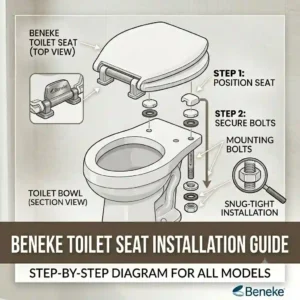
Initial Torque: Tighten the bolts until they are snug, but do not use a power drill. Hand-tighten with a wrench until resistance is firm.
-
The 48-Hour Retighten: After two days of use, the rubber gaskets will have compressed and settled into the porcelain holes. You must go back and give the nuts one final half-turn. If you skip this step, the seat will inevitably start shifting within a month.
Maintaining Hinge Integrity
If you purchased a molded wood seat, the hinges are often screwed directly into the wood core.
-
The Mistake: Spraying liquid cleaner directly onto the hinges. The liquid pools around the screw holes, seeps into the wood, and rots it from the inside out. Within a year, the screws strip out.
-
The Solution: Spray your cleaner onto a microfiber cloth first, then wipe the hinges down. Keep the hardware dry to ensure the structural integrity of the wood core remains solid.
Case Study: Retrofitting a Mid-Century Modern Bathroom
Let’s look at a practical scenario. Last year, I consulted for a family in Palm Springs restoring a 1965 mid-century modern home. The guest bathroom featured an original pastel pink toilet, but the original color-matched seat had cracked cleanly down the middle. They wanted an authentic replacement and initially asked where to find vintage beneke toilet seats in “Blush Pink.”
The Challenge
Original vintage seats are often structurally compromised due to decades of temperature fluctuations, and finding an exact color match in a 50-year-old plastic or wood is nearly impossible due to UV fading. Furthermore, modern cheap plastics clash horribly with the thick porcelain glaze of vintage toilets.
The Solution
Instead of gambling on a used, potentially unsanitary vintage seat from an auction site, we opted for a custom-color Bemis Molded Wood seat.
-
Why it worked: The heavy molded wood provided the correct period-accurate tactile feel (vintage bathrooms rarely used flimsy plastic).
-
The Color Match: Companies like Bemis and Centoco still retain the color codes for classic mid-century fixtures (like Dresden Blue, Venetian Pink, and Ming Green).
-
The Result: For roughly $50, the homeowners achieved a seamless, period-correct look with modern STA-TITE hinges, saving them from having to rip out a perfectly good vintage toilet simply because they couldn’t find a matching accessory.
How to Choose the Right Material: Wood vs. Plastic
One of the biggest dilemmas when replacing classic beneke toilet seats is choosing between molded wood and high-impact plastic. The spec sheets will list both as “durable,” but the biological and chemical realities of your bathroom dictate which one will actually survive.
Molded Wood (The Comfort King)
Molded wood seats are created by compressing wood flour and resins under intense heat, then coating them with enamel.
-
The Pros: They possess excellent thermal mass, meaning they don’t feel freezing cold in the middle of the night. They are heavy, giving them a luxurious, high-end feel that dampens sound when closed.
-
The Reality: Enamel is a surface coating. If you drop a glass cologne bottle and chip the enamel, moisture will penetrate the core. Once wood swells, the seat is ruined. They are strictly for low-humidity, adult-oriented bathrooms.
Polypropylene Plastic (The Indestructible Option)
High-impact plastics are injection-molded as a single, solid piece.
-
The Pros: They are 100% non-porous. You can submerge them in water, bleach them, and subject them to extreme humidity without any structural degradation.
-
The Reality: Cheap plastics flex and pinch the skin. You must look for “heavy-weight” or “commercial-grade” plastics (like the Centoco lines). They will feel slightly colder to the touch and sound hollower when dropped, but their lifespan in a high-abuse environment (kids’ bathrooms, rentals) is easily triple that of a wood seat.
Common Mistakes When Upgrading Your Bathroom Fixtures
It astounds me how many people will spend $400 on a high-end toilet and then sabotage the entire experience by making amateur mistakes with the seat. Here is what you need to avoid.
1. Mismatching the Bowl Shape
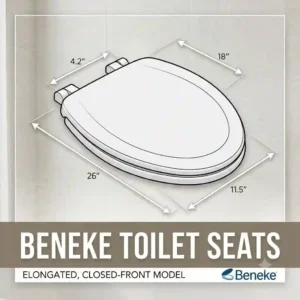
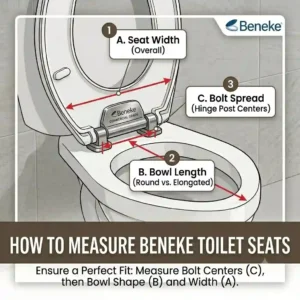
This sounds elementary, but it is the number one reason for product returns. Toilets come in two standard shapes in the US: Round (approx. 16.5 inches from hinges to front) and Elongated (approx. 18.5 inches). You cannot put a round seat on an elongated bowl—it will expose the porcelain rim at the front, creating a massive sanitation issue and looking ridiculous. Always measure from the center of the mounting holes to the front edge of the porcelain before ordering.
2. Ignoring “Hinge Spread” on Vintage Toilets
While modern US toilets have a standardized hinge spread of 5.5 inches, some very old commercial bowls or specialized vintage units have unique spreads (anywhere from 7 to 10 inches). If you are replacing original beneke toilet seats on a 1950s commercial bowl, grab a tape measure and verify the distance between the bolt holes. If it’s not 5.5 inches, you will need an adjustable-hinge commercial seat, not a standard residential one.
3. Using Abrasive Cleaners on Plastic
If you buy a high-gloss plastic seat and clean it with scouring powders (like Comet or Ajax) or abrasive sponges, you will create thousands of microscopic scratches. These scratches destroy the glossy finish, making the seat look dull and cloudy. Worse, these micro-abrasions harbor bacteria and trap dirt, leading to permanent yellowing that no amount of bleach can fix. Stick to mild dish soap or dedicated, non-abrasive bathroom sprays.
Long-Term Cost & The “Efficiency Gap”
When analyzing the total cost of ownership for bathroom fixtures, most consumers only look at the initial purchase price. This is what I call the “Efficiency Gap”—the hidden financial and temporal costs of buying cheap.
Let’s run the numbers. You can go to a big-box store and buy a hollow-core, flimsy plastic seat for $15. However, due to the cheap nylon bolts stretching and the thin plastic fatiguing under daily weight distribution, these seats typically crack or become unmanageably loose within 12 to 18 months. Over a 6-year period, you will buy four of these seats, spending $60, plus the sheer frustration of reinstalling them four times and dealing with a wobbly seat for months on end.
Conversely, investing in a commercial-grade Centoco or a heavy-duty Bemis replacement will cost you in the $40-$50 range upfront. Because these utilize stainless steel hardware and solid-core materials, their functional lifespan easily exceeds 7 to 10 years with zero maintenance. You aren’t just paying for better plastic; you are buying back your Saturday mornings and eliminating a daily micro-frustration.
Furthermore, if you value sustainability, consider the environmental impact. For more context on the environmental and manufacturing footprint of plumbing plastics, I recommend reviewing the EPA’s guidelines on durable goods. Buying one heavy-duty seat rather than four cheap ones drastically reduces landfill waste.
Features That Actually Matter (And Those That Don’t)
Marketing departments love to invent terminology to sell plastic. As an industry insider, let me filter the hype from the hardware so you know exactly what you are paying for when replacing your classic beneke toilet seats.
Valuable Features:
-
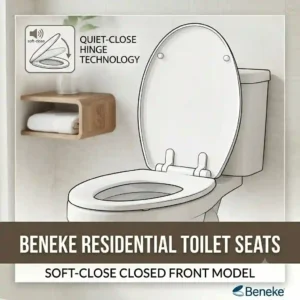
Whisper-Close / Slow-Close Dampers: This is not a gimmick. Hydraulic dampers integrated into the hinges prevent the seat from slamming. If you have children, or if you share a bathroom and don’t want to wake your partner at 2 AM, this feature is mandatory. It also protects the porcelain tank from impact fractures.
-
Quick-Release Hinges: Some modern seats feature hinges that allow you to unclip the entire seat and cover assembly from the mounting bolts with a single latch. This allows you to easily clean the nasty crevice between the hinges and the tank where urine and dust accumulate. It is a massive upgrade for hygiene.
Overhyped Features:
-
“Antimicrobial” Coatings: Many manufacturers charge a 20% premium for seats infused with antimicrobial agents. The science (as detailed in various NIH publications on surface bacteria) shows that while these coatings inhibit the growth of certain odor-causing bacteria on the seat itself, they do NOT protect the user from germs, nor do they replace the need for regular cleaning. Save your money and just use a good disinfectant wipe.
-
Built-in Nightlights: Unless it’s hardwired into a bidet seat, battery-operated LED nightlights built into toilet seat hinges are notoriously prone to water damage and battery corrosion. It is far cheaper and more reliable to plug a $5 motion-sensor nightlight into the wall outlet.
Compliance and ANSI Standards: The Professional Benchmark
If you are outfitting a commercial space, an Airbnb, or a public facility, you cannot just buy any seat off the shelf. Commercial variants of beneke toilet seats and their modern equivalents must adhere to strict regulatory standards.
Specifically, you need to look for ANSI Z124.5 certification. This American National Standards Institute benchmark ensures the seat can withstand specific impact weights, chemical exposures, and mechanical stress tests without failing.
-
Open-Front Requirement: The Uniform Plumbing Code (UPC) mandates that water closets for public use must have elongated bowls and be equipped with open-front seats. This sanitary requirement prevents users from accidentally soiling the front of the rim.
-
No Covers: Commercial restroom seats generally should not have covers. Covers in public stalls create a sanitary hazard (users don’t want to touch them to lift them) and are frequently broken off by vandalism or aggressive use.
If you are a property manager, installing a residential closed-front seat in a commercial ADA stall isn’t just a bad idea; it’s a code violation that can result in fines during a health or building inspection. Always stick to heavy-duty, open-front polypropylene models for public use.
✨ Don’t Miss These Exclusive Deals!
🔍 Take your hygiene and comfort to the next level with these carefully selected products. Click on any highlighted item to check current pricing and availability. Say goodbye to wobbly, cracked plastic and upgrade to a fixture built to last!
Conclusion
Finding genuine beneke toilet seats in 2026 might feel like hunting for a plumbing unicorn, but as we’ve explored, the legacy of their bulletproof engineering is still very much alive. Whether you are outfitting a high-traffic restaurant with a heavy-duty Centoco polypropylene seat or preserving the aesthetic of a 1960s master bath with a solid molded wood Bemis, the key is matching the material to your environment.
Stop settling for flimsy plastic that shifts every time you sit down. By understanding the “Efficiency Gap” and investing slightly more upfront for stainless steel hardware and solid cores, you secure a decade of zero-maintenance reliability. Remember to measure your bowl twice (round vs. elongated), respect the 48-hour retightening rule, and ditch the abrasive chemical cleaners to keep your new seat looking pristine for years to come.
FAQs
❓ What happened to the Beneke company?
✅ The original Beneke Corporation was a massive manufacturer of toilet seats, famously known for their Magnolia line. They were eventually acquired by Sanderson Plumbing Products, which ceased operations in recent years. Today, Centoco produces many of the heavy-duty commercial designs that closely match the original Beneke engineering…
❓ How do I measure my toilet for a replacement seat?
✅ Grab a tape measure and find the center point between the two mounting holes at the back of the porcelain. From that imaginary line, measure straight down the center to the very front edge of the bowl. If it’s ~16.5 inches, you need a round seat; if it’s ~18.5 inches, you need an elongated seat…
❓ Are Centoco and Beneke the same brand?
✅ Not originally, but Centoco acquired assets and tooling related to Beneke’s commercial lines. Today, if you are looking for the extreme durability of an old commercial Beneke seat, the Centoco 500 series is the closest direct descendant currently manufactured…
❓ Can I still get vintage colored toilet seats?
✅ Yes, while original Beneke colored seats are rare, brands like Bemis and Centoco still manufacture replacement seats in classic mid-century colors like Venetian Pink, Dresden Blue, and Fawn Beige. You can match the color without sacrificing modern hinge technology…
❓ How do I fix a wobbly toilet seat hinge?
✅ First, check if the rubber gaskets under the hinge have dry-rotted. If they are intact, loosen the nut, realign the seat, and hand-tighten firmly. For a permanent fix, upgrade to a seat with a shear-nut fastening system (like STA-TITE) that locks onto the porcelain without loosening over time…
Recommended for You
- Automatic Toilet Lid Closer: 5 Best Smart Upgrades for 2026
- 7 Best Automatic Closing Toilet Seats 2025
- 5 Best wooden toilet seats in 2026: Pro-Tested Bathroom Upgrades
Disclaimer: This article contains affiliate links. As an Amazon Associate, I earn from qualifying purchases. If you purchase products through these links, we may earn a small commission at no additional cost to you.
✨ Found this helpful? Share it with your friends! 💬🤗
[addtoany]
