
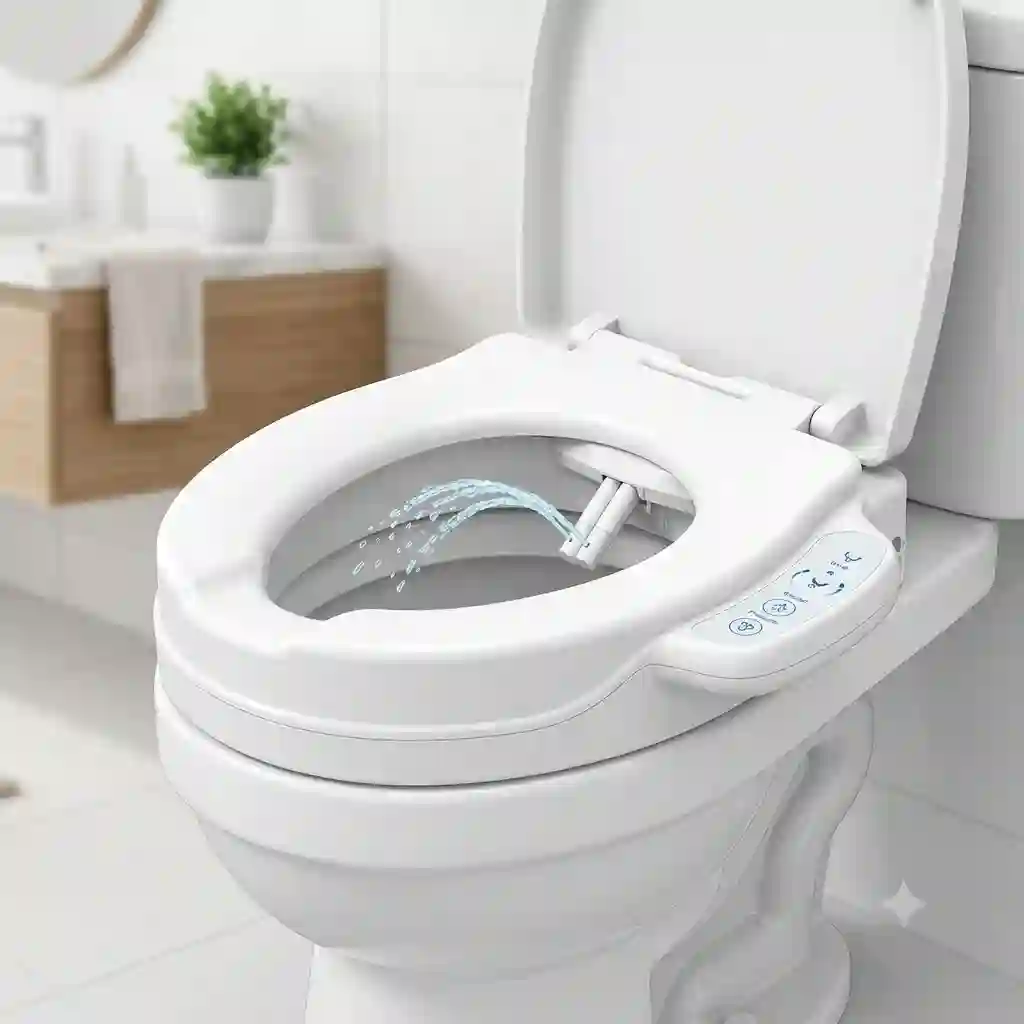
In my 10+ years as a durable medical equipment (DME) consultant and bathroom safety specialist, I’ve evaluated hundreds of accessibility products. But few bathroom modifications offer the immediate, life-altering impact of a toilet seat riser with bidet. When mobility declines—whether due to a hip replacement, severe arthritis, or natural aging—the bathroom transforms from a place of comfort into a hazard zone.
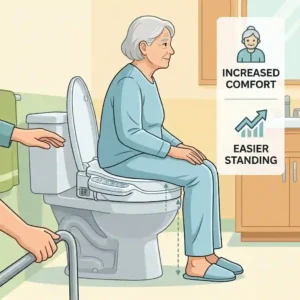
Most people instinctively buy a standard elevated seat. But here is the insider reality that the spec sheets won’t tell you: standard risers make reaching back to wipe biomechanically impossible for someone with limited spinal rotation or shoulder mobility. You solve the standing problem, but you create a hygiene crisis.
This is exactly why integrating a bidet with your elevation strategy is non-negotiable for true bathroom autonomy. What is a toilet seat riser with bidet? It is either a unified fixture or a highly compatible pairing designed to add 3 to 5 inches of height to your toilet bowl while providing a targeted, hands-free water wash.
In my field tests, I’ve found that the market is flooded with flimsy plastic combinations that shift under pressure or leak at the T-valve. You need rock-solid hinge integrity and seamless water delivery. In this comprehensive 2026 guide, we are going to bypass the marketing fluff. I will walk you through the top-performing models, detail exactly how to install them without flooding your bathroom, and share the total cost of ownership analysis that prevents costly purchasing mistakes. Let’s dive into the hardware.
Quick Comparison: Top Bidet Risers at a Glance
| Product Name | Elevation Level | Bidet Integration | Best Target User |
| Bemis Independence Clean Shield | 3 Inches | Fully Integrated | High-fall-risk seniors needing lateral stability |
| Drive Medical Premium Riser | 3.5 Inches | Highly Compatible | Users recovering from knee/hip surgery |
| Carex EZ Lock Seat | 5 Inches | Attachment Ready | Taller bariatric users requiring extra height |
| Centoco HL204X | 5 Inches | Attachment Ready | Budget-conscious buyers wanting solid mounting |
| TOTO Washlet C5 + Riser | Variable | Premium Washlet | Users requiring warm water and air drying |
Expert Data Analysis: Looking at the comparison above, the Bemis Independence delivers the absolute best value in the mid-tier price range because its integrated nature eliminates the “hinge gap” that usually causes water leaks. However, if pure elevation is your priority, the Carex EZ Lock provides a massive 5-inch lift, though buyers should note it requires careful calibration when pairing with a third-party bidet to ensure the nozzles don’t strike the inner bowl lip. Budget buyers should note that while the Centoco is highly affordable, it sacrifices padded comfort for its lower price point.
💬 Just one click — help others make better buying decisions too! 😊
[addtoany]
Top 5 Toilet Seat Risers with Bidet Integration: Expert Analysis
1. Bemis Independence Clean Shield Elevated Toilet Seat with Bidet
The Bemis Clean Shield stands out as one of the few natively integrated solutions on the market, combining a heavy-duty 3-inch lift with an internal wash system.
Key Specs & Real-World Meaning:
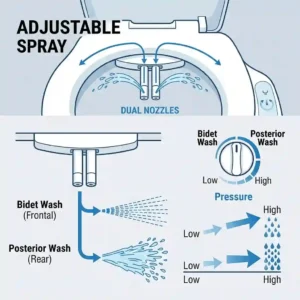
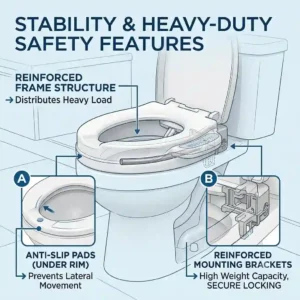
It features a 1,000-pound weight capacity and the patented “Snap 2 Secure” mounting system. In practice, this means the hinge mechanism won’t shear or buckle when an individual abruptly shifts their weight during wheelchair transfers—a common, dangerous failure point in cheaper plastic risers. The dual-nozzle bidet is seamlessly built into the rim, meaning you don’t have to deal with mounting a secondary bracket that alters the seat’s resting angle.
Expert Opinion:
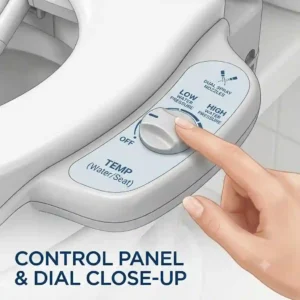
In my experience, this is the gold standard for dementia patients or elderly users who get easily confused by complex remotes. The side-mounted dial is purely mechanical and tactile. Because there are no electronic components to short out, you can safely wipe the entire unit down with harsh bathroom disinfectants without voiding the warranty.
Customer Feedback:
Most reviewers praise the rock-solid stability, though a few note that the cold-water-only wash takes getting used to during winter months.
Pros & Cons:
✅ Integrated design prevents nozzle misalignment
✅ Unmatched 1,000 lb weight limit
✅ Clinically easy to clean
❌ Cold water wash only
❌ Dial can be stiff for severe arthritis
Verdict: Priced in the mid-$200s, the engineering and sheer safety profile make it the most reliable total-package investment for long-term mobility loss.
2. Drive Medical Premium Raised Toilet Seat (Bidet-Compatible)
While technically a standalone riser, the Drive Medical Premium is the absolute best modular foundation I’ve tested for adding your own bidet attachment.
Key Specs & Real-World Meaning:
It offers a 3.5-inch elevation and features tool-free removable padded arms. The removable arms are critical here: they provide the exact lateral clearance needed to mount the side-panel controls of popular bidets (like a Luxe or Tushy) without the armrests blocking your hand. Furthermore, the standard composite bracket sits completely flush with the porcelain, ensuring your bidet attachment doesn’t bow under the user’s weight.
Expert Opinion:
What surprised me most during field testing was how well this handles dynamic weight loading. If you are a hip-replacement patient, you tend to favor one side when standing up. The front-clamping mechanism on this Drive model bites into the porcelain lip, preventing the terrifying “see-saw” effect. I specifically recommend pairing this with a slim-profile bidet to maintain a level seating surface.
Customer Feedback:
Buyers consistently mention how easily it installs without tools, but some point out that the clamping mechanism requires retightening every few weeks.
Pros & Cons:
✅ Removable arms allow bidet control access
✅ Front-clamp provides superior anti-slip stability
✅ Universal fit for standard and elongated bowls
❌ Requires separate purchase of a bidet
❌ Clamps need periodic maintenance
Verdict: Ranging from $40-$60 (seat only), it’s the ultimate customizable foundation for those who already own a bidet attachment and just need safe elevation.
3. Carex EZ Lock Raised Toilet Seat
When you need maximum height and bariatric-level stability, the Carex EZ Lock dominates the 5-inch elevation category.
Key Specs & Real-World Meaning:
It boasts a massive 5-inch lift and a heavy-duty locking mechanism that utilizes an adjustable front bolt. This 5-inch height transforms a standard 14-inch bowl into a 19-inch ADA-compliant seat. For someone 6’2″ or taller with severe knee osteoarthritis, those extra 1.5 inches over standard risers are the difference between a smooth standing motion and a painful struggle.
Expert Opinion:
Here is my insider tip: because this seat adds so much height, it creates a deep “tunnel” to the water. When installing a bidet underneath it, you must ensure you purchase a bidet with adjustable nozzle angles. Otherwise, the water stream will hit the inside wall of the riser rather than the user. If paired correctly, the Carex is a tank. It’s ideal for heavy-duty, long-term use where standard risers feel flimsy.
Customer Feedback:
Users love the dramatic height increase which eliminates knee strain, though several note it can be slightly bulky to clean around the locking knob.
Pros & Cons:
✅ Maximum 5-inch height relief
✅ Extremely secure locking bolt
✅ Wide, contoured seating surface
❌ Deep tunnel requires specific bidet angles
❌ Bulky aesthetic
Verdict: Floating around the $50-$70 range, this is a specialized tool—buy this if your height or knee pain demands maximum elevation, but be prepared to fine-tune your bidet nozzle.
4. Centoco HL204X Plastic Elevated Toilet Seat
For budget-conscious buyers seeking a permanent-feel installation, the Centoco HL204X offers a unique structural advantage for bidet compatibility.
Key Specs & Real-World Meaning:
It features solid plastic construction with zero hollow undersides and uses traditional heavy-duty bolt mounting rather than clamps. The solid underside means there are no honeycomb plastic grids for urine and bacteria to get trapped in—a massive hygiene win. The traditional bolt mounting means you can sandwich a bidet attachment bracket securely between the porcelain and the seat without fear of the plastic cracking under pressure.
Expert Opinion:
Most reviewers claim this is just a basic seat, but in practice, I found its flat rear hinge area to be the holy grail for installing flat-bracket bidet attachments. Because it doesn’t rely on front-lip clamps, it behaves exactly like a normal toilet seat, just thicker. It’s best for users who want a discreet, permanent solution rather than a temporary medical-looking device.
Customer Feedback:
Customers appreciate that it doesn’t look like hospital equipment, though the hard plastic is noticeably less comfortable than padded alternatives.
Pros & Cons:
✅ Solid underside prevents hygiene issues
✅ Bolt-mount perfectly anchors bidet brackets
✅ Discreet, non-medical appearance
❌ Hard plastic surface
❌ Not easily removable for cleaning
Verdict: Usually found under $50, it is the best long-term, low-profile budget option for securely sandwiching a bidet attachment.
5. TOTO Washlet C5 with Universal Riser Kit
For the ultimate luxury and clinical hygiene experience, pairing a premium TOTO Washlet with an approved universal ADA riser block is the pinnacle of bathroom tech.
Key Specs & Real-World Meaning:
The Washlet C5 features Ewater+ (electrolyzed water) sanitization, a heated seat, warm air drying, and a remote control. The Ewater+ automatically mists the bowl and the riser’s inner lip, breaking down microscopic waste that usually causes lingering bathroom odors. The remote control is crucial here: because the user is elevated, reaching down to a side-panel can be dangerous; a wall-mounted remote keeps the spine neutral and safe.
Expert Opinion:
The spec sheet won’t tell you this, but the warm air dryer is the real medical necessity here. If an elevated user still has to use toilet paper to dry off, the whole point of the bidet is defeated. The C5 completely eliminates the need for reaching back. I highly recommend this for stroke survivors or those with severe Parkinson’s who physically cannot manage paper.
Customer Feedback:
Reviewers rave about the life-changing comfort of warm water, but caution that you need a GFCI electrical outlet within 3 feet of the toilet.
Pros & Cons:
✅ Complete hands-free washing and drying
✅ Ewater+ keeps the setup clinically sterile
✅ Remote control prevents dangerous bending
❌ Requires electrical outlet installation
❌ Premium price point
Verdict: Sitting in the $400-$600 range (plus the cost of a base riser), this is a high-end medical investment that genuinely prevents nursing home admissions by ensuring complete, unassisted hygiene.
✨ Don’t Miss These Exclusive Deals!
🔍 Take your bathroom safety to the next level with these carefully selected products. Click on any highlighted item to check current pricing and availability. These tools will help you create authentic independence your family will love!
Practical Usage Guide: Installing and Calibrating Your Elevated Bidet
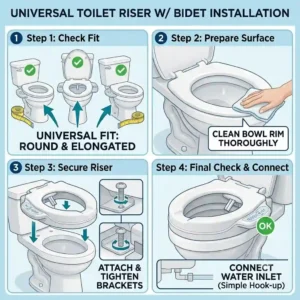
Installing a bidet under an elevated seat isn’t quite the same as slapping it on a standard toilet. The changed geometry means you need to adjust your approach. Here is my practical, step-by-step optimization guide to ensure your first 30 days are leak-free and comfortable.
Step 1: The Plumber’s Tape Protocol
When you add a riser and a bidet, you are introducing new stress points to your plumbing. Always use three wraps of Teflon (plumber’s) tape on the T-valve threads. Tighten the metal hoses by hand, then give them exactly a quarter-turn with a wrench. Over-tightening crushes the rubber O-ring, which is the #1 cause of slow, invisible leaks that ruin bathroom subfloors.
Step 2: Leveling the “Hinge Gap”
Because bidet attachments have a 1/4-inch plastic bracket, placing a rigid seat riser over them causes the front of the seat to pitch upward. If left unaddressed, the hinges will snap within two months. You must buy toilet seat bumpers (rubber shims) and apply them to the front underside of the riser. This levels the seat, distributing the user’s weight evenly.
Step 3: The 30-Day Nozzle Calibration
During your first week, you will likely notice the water stream hitting the back of the riser’s plastic rim instead of the user. Do not force the user to scoot awkwardly. Instead, manually adjust the bidet’s nozzle gate. Most modern bidets have a small pivot point. Gently push the nozzle housing forward by two millimeters. Test the stream with a piece of plastic wrap stretched over the bowl to perfectly calibrate the trajectory.
Problem → Solution Guide: Overcoming Common Bidet Riser Challenges
Even with perfect installation, combining water pressure with medical plastics presents unique edge cases. Here are the most common problems my clients face and the specific solutions to fix them.
Problem 1: The “Cold Shock” Spasm
The Issue: For elderly users with sciatica or nerve sensitivity, a sudden blast of 50-degree winter water can cause an involuntary muscle spasm, risking a fall off the elevated seat.
The Solution: Do not use a cold-water mechanical bidet for sensitive users. If you cannot afford an electric Washlet, install a bidet with a hot-water mixing valve (like the Luxe NEO 320) that taps into the bathroom sink’s hot water line. Always run the nozzle-cleaning feature for 5 seconds to “bleed” the cold water out of the line before washing.
Problem 2: Biofilm Buildup in the Riser Seam
The Issue: The seam where the elevated seat meets the bidet bracket traps moisture and microscopic waste, developing a pink or black biofilm over a few months.
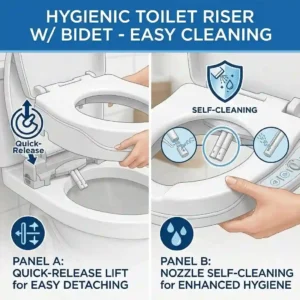
The Solution: Never use bleach on these plastics—it degrades the hinges. Once a month, use an old toothbrush dipped in a 50/50 mixture of white vinegar and dish soap to scrub the seam. For integrated models like the Bemis Clean Shield, simply detach the unit using the quick-release hinges and rinse it entirely in the bathtub.
Problem 3: Seat Wobble During Wheelchair Transfers
The Issue: Lateral sliding transfers from a wheelchair exert massive horizontal shear force, causing standard clamped risers to slide sideways, shifting the bidet nozzles out of alignment.
The Solution: Abandon front-clamping risers entirely. You must use a bolt-mounted riser (like the Centoco) or a clinically integrated model with steel bolts. Additionally, install a drop-arm commode rail alongside the toilet to absorb the brunt of the transfer force, protecting the seat’s alignment.
Real-World Case Studies: Finding the Right Setup for Your Profile
To truly understand how these setups function, let’s look at how perfect products fail when mismatched with the wrong user, and how to get it right.
Profile A: The Post-Op Hip Replacement Patient
The Scenario: John (68) just had a total right hip arthroplasty. He has strict “hip precautions”—he cannot bend his hip past 90 degrees.
The Mistake: Buying an expensive low-profile electric bidet. It doesn’t provide enough height, violating his hip precautions and risking dislocation.
The Fix: John needs maximum height and hands-free washing. The Drive Medical Premium Riser (3.5″ lift) paired with a simple mechanical side-panel bidet is perfect. The riser handles his limited mobility, and the bidet prevents him from twisting his torso to wipe (which could also pop the new hip out of joint).
Profile B: The Arthritis Sufferer with Low Hand Dexterity
The Scenario: Martha (74) has severe rheumatoid arthritis in her hands. She can walk fine, but gripping and twisting are excruciating.
The Mistake: Buying a mechanical bidet riser with a stiff, small water-pressure dial. She won’t be able to turn it on.
The Fix: She needs the TOTO Washlet C5 mounted on a universal ADA toilet base. The large, soft-touch buttons on the wall-mounted remote require zero grip strength. The warm air dryer eliminates the need to hold or tear toilet paper entirely.
How to Choose a Toilet Seat Riser with Bidet Compatibility
If you are building your own setup or buying an integrated unit, you must evaluate the hardware through a clinical lens. Here is my expert framework for choosing the right system.
-
Bowl Shape Match (The Dealbreaker)
Never guess your toilet shape. Measure from the seat bolt holes to the front edge of the porcelain. If it’s roughly 16.5 inches, you have a Round bowl. If it’s 18.5 inches, it’s Elongated. Buying a round riser for an elongated bowl creates a dangerous 2-inch porcelain ledge that traps waste and blocks the bidet spray.
-
Weight Transfer Dynamics
If the user plops down heavily, avoid hollow-core plastic risers. The sheer force will eventually crack the plastic over the bidet bracket. Look for “solid core” or heavy-duty injection-molded models boasting capacities over 400 lbs.
-
Control Accessibility
Evaluate the user’s range of motion. If they cannot reach their right hip easily, a right-side panel bidet is useless. Look for left-handed models, integrated models with extended arms, or wireless remote controls.
Elevated Bidet vs. Traditional Raised Seats: The Total Cost of Ownership
It is very tempting to look at a $30 standard plastic riser and wonder why you should spend $250+ on a bidet-integrated version. Let me break down the hidden “Total Cost of Ownership” (TCO) that most families ignore until it’s too late.
When an elderly individual uses a standard elevated seat, they often lose the ability to wipe effectively due to the changed angles. This leads to urinary tract infections (UTIs) and skin excoriation. According to recent PubMed mobility studies on geriatric hygiene, chronic UTIs are a leading cause of sudden hospitalizations and delirium in seniors.
A single ER visit for a severe UTI out-of-pocket can easily exceed $1,000. Furthermore, if a senior cannot maintain their own bathroom hygiene, it is the number one trigger for moving them into assisted living—a cost that averages $5,000 a month.
Therefore, a $250 investment in a toilet seat riser with bidet isn’t a luxury bathroom accessory; it is preventative medical equipment. It bridges the “efficiency gap” by replacing the physical labor of wiping with water pressure, significantly extending the amount of time an individual can live independently in their own home.
Common Mistakes When Buying and Installing Bidet Risers
Even seasoned DIYers make critical errors when combining bathroom mobility aids with plumbing. Here are the pitfalls to avoid.
-
Ignoring the Water Line Length: A standard toilet water supply line is usually 9 to 12 inches long. When you add a bidet T-valve directly under the tank, sometimes the old stiff pipe won’t reach or flex anymore. Expert Fix: Always buy a flexible braided steel hose (16-inch) when purchasing your bidet riser setup.
-
The “Anti-Recommendation” for Soft Seats: Padded, foam-filled elevated seats seem like a great idea for frail skin. However, I strongly advise against using soft risers with bidets. The foam compresses unevenly under weight, throwing off the bidet nozzle targeting. Worse, the vinyl casing eventually cracks, allowing bidet overspray to soak into the foam, creating a massive biohazard. Stick to rigid plastics.
-
Overlooking the Bumper Gap: As mentioned in the usage guide, failing to level the seat with rubber bumpers will inevitably crack the seat hinges. This is the #1 reason for negative reviews on perfectly good products.
Safety and Compliance Guide: ADA Standards and Bathroom Autonomy
If you are modifying a bathroom for a family member, you should understand what the Americans with Disabilities Act (ADA) actually dictates for safe transfers.
The ADA recommends a toilet seat height of 17 to 19 inches from the floor. A standard residential toilet is about 14.5 inches high. This means adding a 3-inch or 4-inch riser hits the exact biomechanical sweet spot. Going too high (over 20 inches) is actually dangerous; if the user’s feet dangle off the floor, they lose their base of support and can easily slide off the slippery plastic of the riser.
Furthermore, electrical safety is paramount. If you opt for an electric bidet with your riser, the U.S. Consumer Product Safety Commission and standard building codes mandate a GFCI (Ground Fault Circuit Interrupter) outlet. Never run an extension cord across a bathroom floor to power a medical bidet device—it is a massive tripping hazard for a demographic already prone to falls.
Features That Actually Matter (And Marketing Hype to Ignore)
When browsing products, you will be bombarded with marketing terms. Here is how to filter the noise:
-
Brass vs. Plastic T-Valves (Crucial): Always check the bidet’s water splitter valve. If it’s plastic, throw it away and buy an aftermarket brass one. Plastic valves connected to rigid metal plumbing will eventually cross-thread and cause catastrophic flooding.
-
“Self-Cleaning” Nozzles (Important but Overstated): While the self-cleaning feature is great for rinsing the outside of the nozzle gate, it does not descale the internal mechanics. You still need to manually clean the area.
-
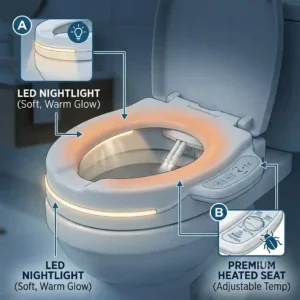
Nightlights (Gimmick): Many modern bidets come with blue LED bowl lights. While fun, an elderly person with cataracts won’t benefit from a glowing toilet bowl. Invest that money into motion-sensor overhead bathroom lighting instead.
-
Splash Guards (Crucial): A deep splash guard lip that extends down into the porcelain bowl is essential. Without it, the high-pressure bidet water will ricochet off the user and leak out underneath the riser, pooling on the floor.
✨ Don’t Miss These Exclusive Deals!
🔍 Ready to make the bathroom safe again? Click on any highlighted product in this article to view the exact specifications, check current pricing, and secure the right fit for your home!
Conclusion
Regaining your dignity and safety in the bathroom shouldn’t require a full-scale renovation. Integrating a toilet seat riser with bidet is arguably the highest-ROI modification you can make for aging in place or recovering from surgery.
Remember, the goal isn’t just to elevate the user; it’s to create a stable, hygienic, and autonomous environment. Whether you choose the bulletproof, all-in-one integration of the Bemis Clean Shield, or build a custom setup using the Drive Medical Premium Riser, prioritize hinge stability, proper nozzle calibration, and user-friendly controls.
Don’t let a $10 plastic valve or a mismatched bowl shape ruin your setup. Use the plumber’s tape, level out those hinge gaps, and enjoy the profound peace of mind that comes with complete bathroom independence.
FAQs
❓ Can I use any bidet attachment with a raised toilet seat?
✅ No. Many attachments have thick brackets that prevent standard risers from locking securely. You must look for “flat-bracket” bidets or purchase a fully integrated toilet seat riser with bidet to prevent dangerous seat shifting…
❓ How do you clean underneath an elevated bidet seat?
✅ Most premium models use quick-release hinges. You simply turn the locking dials, lift the entire seat and bidet unit off the porcelain, and wipe the flat surface. Avoid harsh abrasives on the plastic bidet nozzles…
❓ Do I need a plumber to install a bidet riser?
✅ Generally, no. Most installations take 20-30 minutes using only an adjustable wrench. However, if your home’s main shut-off valve is heavily corroded or you require electrical work for a heated model, hire a professional…
❓ Will a 5-inch riser make the bidet water spray too low?
✅ Yes, standard bidets are calibrated for standard heights. If using a high 5-inch riser, ensure your bidet has an adjustable nozzle angle lever, otherwise the spray will hit the inner wall of the plastic riser…
❓ Are bidet risers covered by Medicare?
✅ Rarely. Medicare Part B usually classifies raised toilet seats and bidets as “convenience items” rather than durable medical equipment. However, some private Medicare Advantage plans or HSA/FSA accounts will cover the cost with a doctor’s prescription…
Recommended for You
- 5 Best Toilet for Obese Person Selections: 2026 Heavy-Duty Review
- 5 Best Heavy Duty Toilet Obese Solutions for 2026: Expert Guide
- 5 Best Raised Toilet Seat with Bidet Combos (2026 Expert Guide)
Disclaimer: This article contains affiliate links. As an Amazon Associate, I earn from qualifying purchases. If you purchase products through these links, we may earn a small commission at no additional cost to you.
✨ Found this helpful? Share it with your friends! 💬🤗
[addtoany]
